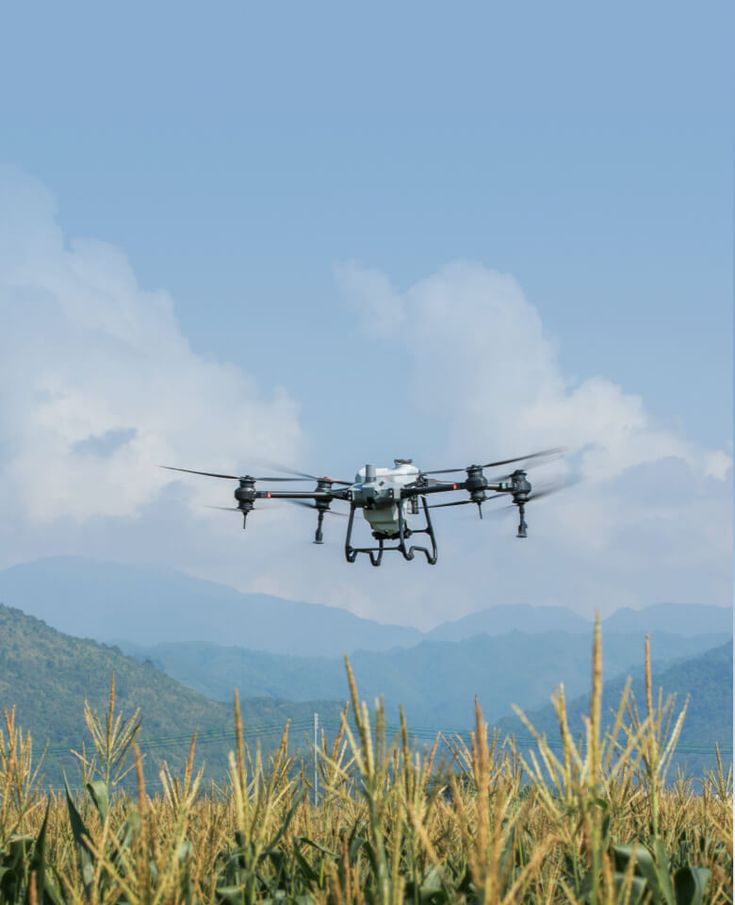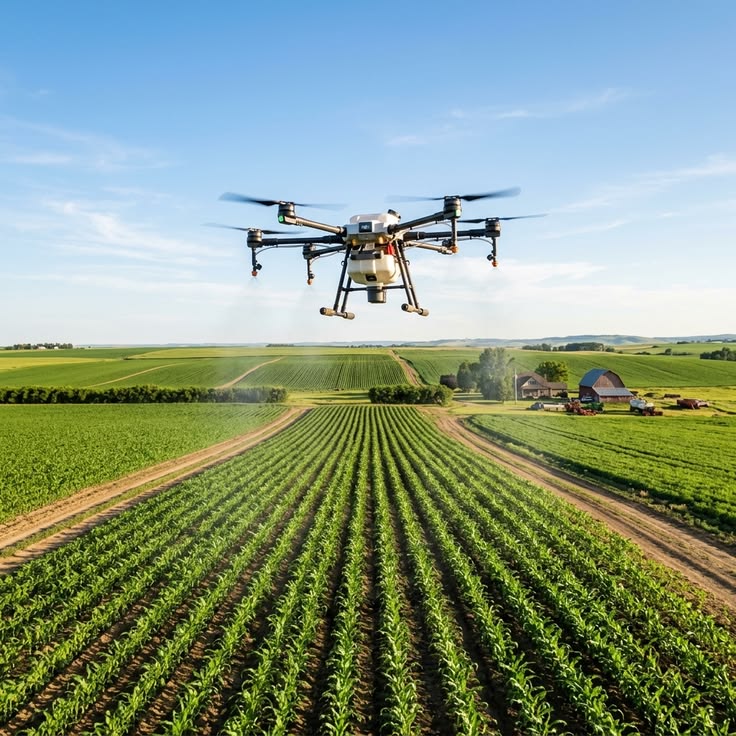
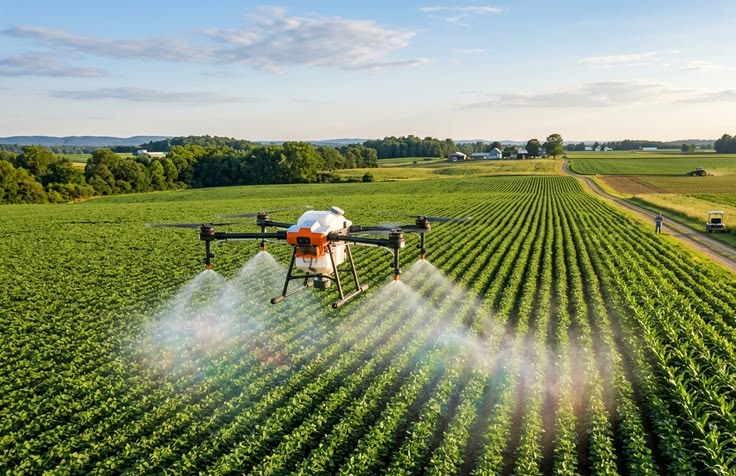
For years, Tunisian civilians faced a blanket ban on operating drones, imposed for national security reasons. That changed on December 4, 2025, when Tunisia's Parliament approved a measure in its 2026 Finance Bill specifically authorizing farmers to import and use drones for agricultural purposes — a targeted legal carve-out from a long-standing restriction, aimed squarely at helping the country's agricultural sector adopt precision farming technology already common elsewhere in the world.
The timing isn't incidental. Tunisia's agricultural sector contributes roughly 9 percent of national GDP and employs about 13 percent of the country's active population, yet it has spent recent years grappling with a six-year drought and mounting food-import dependence. Authorities have increasingly turned to technology adoption as a lever for improving productivity under increasingly severe water stress — and drones, capable of monitoring irrigation, detecting disease, and mapping crop conditions from the air, have become one of the more concrete tools available.
Years of Groundwork Behind One Law Change
The 2026 legislative change didn't emerge from nowhere. It builds on a pilot programme launched back in 2018 by the African Development Bank, in partnership with the Tunisian government and the Korea-Africa Economic Cooperation fund, which introduced agricultural drone use specifically in the Sidi Bouzid region of central Tunisia. That early initiative trained a first cohort of Tunisian drone pilots — eight from an initial pool of 40 candidates — with the explicit goal of eventually training 400 young Tunisians by 2021 and establishing a dedicated training centre that could later evolve into a regional centre of excellence for drone technology.
The pilot delivered concrete early results: drone-collected data helped optimize irrigation systems and fertiliser application, supported earlier detection of crop diseases, and improved the quality of the statistical data feeding into farmer decision-making. By late 2025, a follow-up initiative in Sidi Bouzid had trained 42 Tunisian drone operators, according to local reporting — evidence the programme's training pipeline had continued expanding well beyond its original pilot cohort even before the formal legal barrier to broader civilian drone use was lifted.
Sponsored
What Farmers Can Now Do Legally
With the Finance Bill amendment in place, individual Tunisian farmers — not just government-managed pilot projects — can now import and legally operate drones on their own land for agricultural monitoring, irrigation management, and crop health assessment. Some farmers, according to local reporting, had already begun anticipating this shift and preparing for a formal legal framework governing agricultural drone use even before the measure passed, suggesting real on-the-ground appetite for the technology once legal barriers were removed.
Officials involved in the original pilot project framed its significance in explicitly regional terms. Tunisian Minister of Agriculture Samir Taïeb described the broader drone initiative as marking the country's entry into the era of the Fourth Industrial Revolution — a success, he said, not just for Tunisia but for the African continent as a whole, given the country's stated ambition to eventually host a pan-African drone training centre capable of supporting agricultural technology adoption well beyond its own borders.
Why This Matters Beyond Tunisia
Tunisia's experience illustrates a pattern increasingly visible across African agritech more broadly: regulatory frameworks, not just the underlying technology, are often the binding constraint on adoption. Drone hardware, satellite imagery analysis, and AI-driven crop monitoring have been technically available and in limited pilot use across multiple African countries for years — the harder, slower work has frequently been building the legal and institutional frameworks that allow ordinary farmers, rather than only government projects and well-funded research pilots, to actually use the technology at scale.
For Tunisian farmers navigating an increasingly water-stressed agricultural environment, the ability to legally deploy drones for irrigation monitoring and early disease detection offers a genuinely practical tool for stretching scarce water resources further and catching crop problems before they become yield losses — assuming the technology's cost and technical learning curve don't become the next barrier standing between the new legal permission and its actual use in the field.