Technology meets the pressure to produce more efficiently
Morocco’s agricultural sector is confronting a challenge familiar to many farming economies: how to maintain productive agriculture while managing scarce resources and rising production costs.
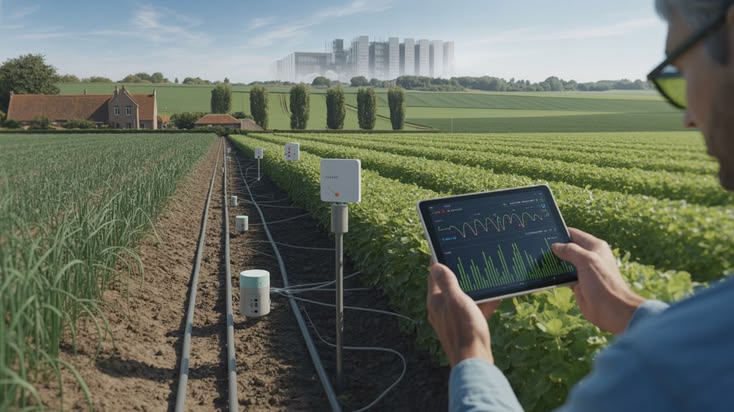
Precision agriculture offers one possible response. Instead of treating an entire field uniformly, these approaches use information from sensors, digital tools, field observations and aerial imagery to guide decisions about irrigation, fertiliser application and crop protection.
The technology market is developing in Morocco, but adoption remains uneven. An article published by Moroccan newspaper Le Matin on 7 October 2026 reported findings from a survey by the Hassan II Institute of Agronomy and Veterinary Medicine involving 30 agricultural technology providers.
The survey points to a growing range of available services, while highlighting financial and practical barriers that continue to restrict adoption.
Sensors and software lead the available technology
The survey found that sensors were offered by 60% of the businesses surveyed. Farm-management software was offered by approximately 53%, while 43% reported providing decision-support systems.
These technologies serve different purposes.
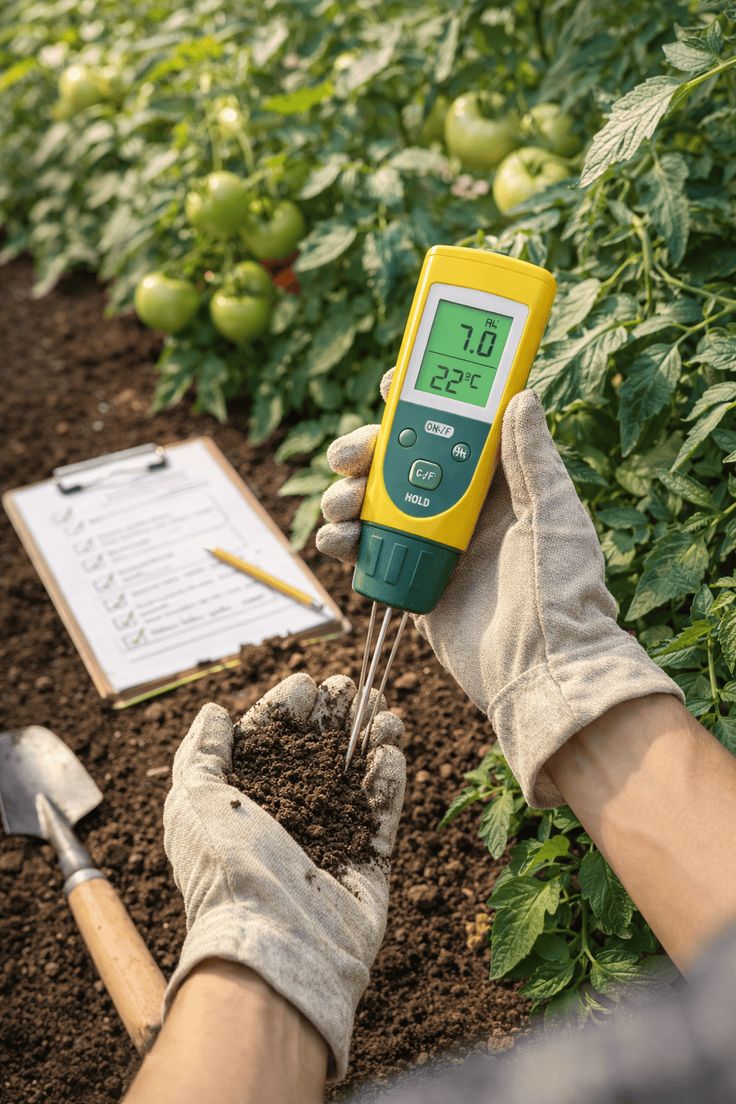
Soil-moisture sensors can help farmers monitor water conditions around crop roots. When interpreted correctly, the information can support irrigation scheduling and help avoid unnecessary watering. Farm-management software can organise information about field activities, input use and production costs, while decision-support tools can combine multiple data sources to help farmers assess when to irrigate, fertilise or take other actions.
The value comes from using information to make better decisions, not from installing technology for its own sake. Sensor readings must be interpreted in the context of crop type, soil conditions, weather and the stage of plant development.
Farmers also need reliable equipment, appropriate training and a clear understanding of how the information will change their management decisions.
Smart irrigation stands out as a key opportunity
Water management is one of the strongest potential applications of precision agriculture in Morocco.
The survey reported that precision irrigation was the most requested service among the surveyed businesses that identified customer demand, cited by around 65%. Precision crop protection and decision-support systems followed, at approximately 48% each.
This finding suggests that farmers and agricultural businesses are particularly interested in technologies that help manage costly inputs and operational decisions.
Precision irrigation can involve soil-moisture monitoring, weather information, flow measurement and automated controls. Used appropriately, these tools can help farmers determine when irrigation is required and where adjustments may be needed.
However, the technology does not guarantee water savings on every farm. Results depend on the existing irrigation system, soil and crop conditions, maintenance and whether farmers act on the information correctly.
A sensible starting point is to identify the farm’s main water-management problem and assess whether a particular tool can address it at a cost the business can recover.
Agricultural drones: a service opportunity for farmers
Drones are attracting attention because they can collect aerial information across fields and, where regulations and equipment permit, support certain crop-treatment operations.
In Morocco, agricultural technology providers offer drone-related services for applications such as crop monitoring and spraying. A service-based model may be more accessible to farmers than buying and maintaining a drone themselves.
Rather than making a major upfront investment, a farmer could pay a qualified service provider for a defined task. This can also give producers an opportunity to evaluate the technology before deciding whether more extensive use makes financial sense.
Nevertheless, drones are not a universal solution. Their suitability depends on the task, field conditions, operator competence, equipment, weather and applicable aviation and agricultural regulations. Farmers should confirm that a provider has the necessary authorisations and can demonstrate the service’s expected value.
Sponsored
Aerial images also need careful interpretation. A patch of crop showing unusual colour or growth may indicate water stress, nutrient deficiency, pests, disease or another issue. Additional field checks may be necessary before spending money on treatment.
The affordability challenge
The same survey identifies a major obstacle to wider adoption: the cost of investment.
According to the findings reported by Le Matin, around 63% of the surveyed businesses identified investment costs as a barrier to adopting precision agriculture. The survey also highlighted constraints associated with farm income, training, technical skills and reliance on public support.
This creates a risk of a two-speed transition. Larger farms with stronger cash flow may be better placed to purchase equipment and employ technical specialists, while smaller producers may struggle to justify the expense.
For small and medium-sized farms, the most appropriate solution may not be to buy every new technology. It may be to start with a specific production problem, compare available services and measure the results before expanding.
Farmers can also explore cooperative purchasing, shared equipment, service contracts and demonstrations arranged through trusted agricultural organisations. These approaches may reduce individual costs, although their success depends on transparent pricing and reliable service delivery.
How farmers can assess whether the investment is worthwhile
Before purchasing a sensor, drone service or digital management system, farmers should ask four practical questions.
First, what problem will the technology solve? The goal might be reducing unnecessary irrigation, identifying crop stress earlier or improving the timing of field operations.
Second, what is the full cost? The calculation should include purchase or service fees, installation, maintenance, connectivity, training and any required software subscriptions.
Third, how will performance be measured? Farmers can compare input use, labour requirements, crop condition and marketable output before and after adoption, while accounting for differences in weather and other conditions.
Finally, is the technology suitable for the farm’s size and production system? A tool designed for a large, highly automated operation may not be the most economical choice for a smaller farm.
The decision should be based on demonstrated usefulness and realistic financial expectations rather than novelty.
Building a more accessible precision-agriculture market
Morocco’s emerging market creates opportunities for equipment suppliers, software developers, drone operators, irrigation specialists, agricultural advisers and training providers.
For the sector to expand beyond a limited group of customers, providers will need solutions adapted to different farm sizes and budgets. Practical demonstrations, after-sales support, farmer training and clear information about costs could help build confidence.
Cooperatives and producer organisations may also have a role in helping members access technical services and compare solutions. Research institutions can contribute by evaluating performance under local conditions and helping farmers understand which technologies offer measurable benefits.
The findings from the October survey are a useful snapshot of the market, not a complete measure of national adoption or proof that all available products deliver the same results. Further field-level evidence will be needed to establish which solutions are most cost-effective for different crops and farming systems.
The future is smarter farming, not simply more equipment
Morocco’s precision-agriculture market is developing at a time when efficient resource use and careful production planning are becoming increasingly important.
Sensors, software, drones and smart irrigation systems can give farmers better information, but their success depends on the quality of that information, the skills to interpret it and the economics of applying it.
The next stage of Morocco’s agricultural technology transition will depend on making precision farming useful and affordable—not merely available. If providers and farmers focus on solving clearly defined problems and measuring results, these tools could support more efficient production while opening new opportunities for agricultural service businesses.
For farmers considering an investment today, the strongest starting point is simple: identify the biggest avoidable cost on the farm, choose a suitable tool or service, and measure whether it delivers a worthwhile return.