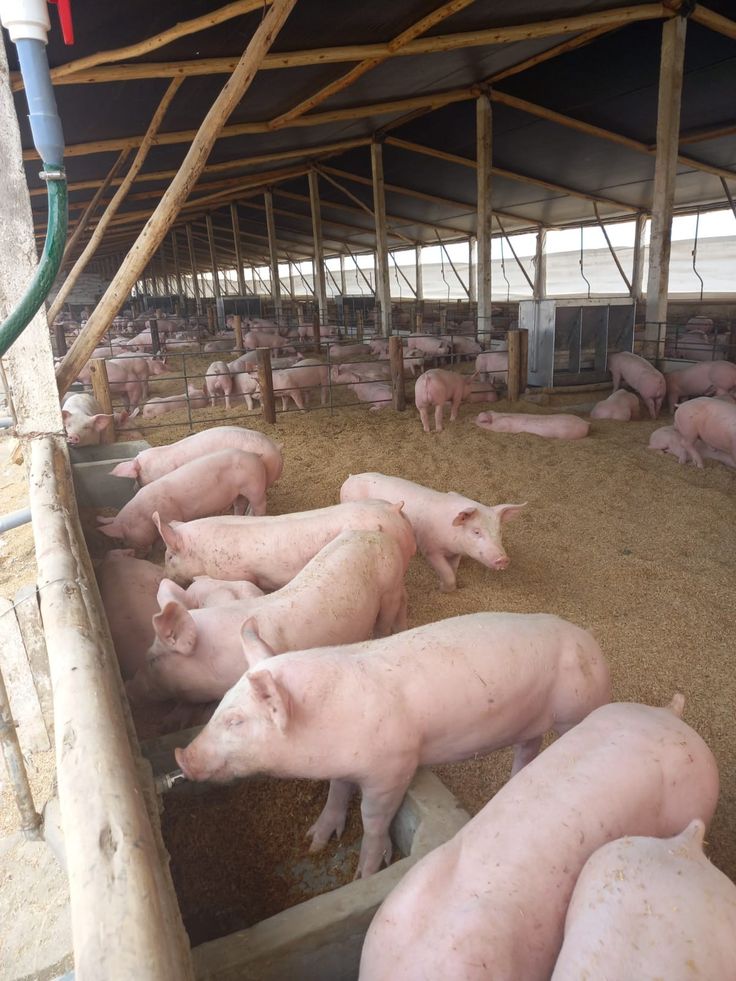
Pig farming has become one of Africa's fastest-growing livestock enterprises, providing income, employment and an affordable source of animal protein for millions of households. Demand for pork continues to rise as urban populations expand and consumer preferences evolve, creating new opportunities for commercial producers and smallholder farmers alike. Countries including Uganda, Kenya, Zambia, South Africa, Nigeria, Malawi and Ghana have experienced significant growth in pig production over the past decade, supported by increasing investment in breeding, animal nutrition and market development.
Despite this progress, Africa's swine industry continues to face numerous challenges that limit productivity and profitability. Disease outbreaks, rising feed costs, limited access to improved genetics, inadequate veterinary services and gaps in technical knowledge remain major constraints for producers. Experts believe that increased investment in research, innovation and farmer education will be essential if the industry is to meet growing demand while remaining economically and environmentally sustainable.
One of the greatest threats to pig production across Africa is African Swine Fever (ASF), a highly contagious viral disease that causes severe economic losses but does not affect humans. Outbreaks have resulted in the loss of thousands of pigs in several countries, disrupting household incomes and regional pork supply chains. Because there is currently no widely available commercial vaccine for ASF, prevention depends largely on strong biosecurity measures, early disease detection and rapid reporting of suspected cases.
Biosecurity begins at the farm gate. Limiting unnecessary visitors, disinfecting equipment and vehicles, controlling the movement of animals and maintaining clean housing all help reduce the risk of disease introduction. Farmers are also advised to avoid feeding untreated food waste or swill to pigs, as this practice has been associated with the spread of several infectious diseases. Quarantining newly purchased animals before introducing them to established herds further reduces the likelihood of disease transmission.
Research institutions across Africa are playing an increasingly important role in supporting pig farmers through improved disease surveillance, breeding programmes and nutritional studies. Universities, veterinary laboratories and agricultural research centres are collaborating with governments and development partners to identify practical solutions that improve productivity under local farming conditions. Their work includes evaluating locally available feed ingredients, improving breeding strategies and strengthening diagnostic capacity for livestock diseases.
Feed remains one of the largest production costs in pig farming, making nutrition a key area for innovation. Researchers continue to investigate alternative feed resources such as cassava by-products, sweet potato vines, brewer's grains, sunflower meal and insect-based protein as ways of reducing dependence on expensive imported ingredients. When properly formulated, these locally available resources can lower feeding costs while maintaining growth performance.
Sponsored
Genetic improvement is another important driver of productivity. Selecting breeding animals based on growth rate, litter size, feed conversion efficiency and disease resistance enables producers to gradually improve herd performance over successive generations. Artificial insemination services and structured breeding programmes are becoming increasingly available in some African countries, allowing farmers to access superior genetics without maintaining expensive breeding boars.
Digital technology is also transforming pig farming. Mobile applications now provide farmers with access to veterinary advice, production records, market prices and disease alerts. These technologies help producers make informed management decisions while strengthening communication between farmers, veterinarians and extension officers.
Farmer training remains equally important. Many production challenges result not from lack of resources but from limited access to technical information. Training programmes covering housing design, nutrition, breeding, disease prevention and financial management enable producers to adopt better farming practices and improve enterprise profitability. Strong producer associations and cooperatives also encourage knowledge sharing while improving access to markets and production inputs.
Environmental sustainability is becoming an increasingly important consideration within the swine industry. Proper manure management reduces environmental pollution while creating opportunities to produce organic fertiliser or biogas for household and farm use. Efficient feed utilisation and responsible waste management contribute to more sustainable pig production systems that benefit both farmers and surrounding communities.
Government policies that support veterinary services, livestock research, extension programmes and private sector investment will continue to play a vital role in the future growth of Africa's pig industry. Partnerships between research institutions, universities, development organisations and commercial producers can accelerate the adoption of innovative technologies while strengthening disease preparedness across national borders.
With appropriate investment in research, improved biosecurity and continued farmer education, Africa's swine industry has significant potential to contribute to food security, employment creation and economic development. As demand for pork continues to increase, adopting science-based management practices will enable producers to improve productivity while building a more resilient and competitive livestock sector.