Across Central Africa, agriculture is gaining renewed attention as governments and research institutions search for practical solutions to food insecurity, rural poverty, and climate vulnerability. One of the most significant examples of this shift is the growing collaboration between the International Institute of Tropical Agriculture (IITA) and the Democratic Republic of Congo (DRC), a country with vast agricultural potential but long-standing structural challenges.
The DRC is one of Africa’s most resource-rich nations, yet its agricultural sector remains underdeveloped. Despite having millions of hectares of arable land and abundant rainfall, the country still struggles with low productivity, weak value chains, and limited access to improved seeds and modern farming technologies. As a result, many rural communities rely on subsistence farming, with limited surplus for markets.
To address these challenges, partnerships between research institutions and national agricultural programs are becoming increasingly important. A recent engagement between IITA and the DRC’s National Agricultural Development Programme (PNDA) reflects this growing commitment to transforming agriculture through science, innovation, and capacity building.
A Partnership Built on Shared Agricultural Goals
The collaboration between IITA and DRC institutions is not new, but it has gained new momentum in recent years as both sides seek to strengthen agricultural systems that can support long-term food security and economic development.
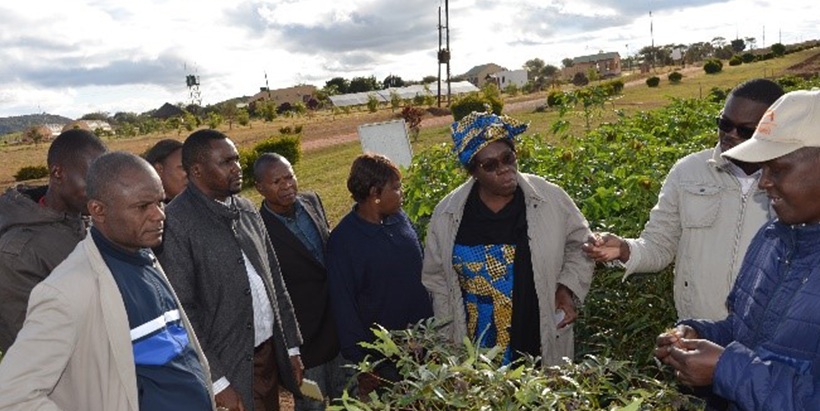
During a recent exchange visit involving Congolese agricultural delegates, discussions focused on strengthening research cooperation, improving seed systems, and expanding access to improved crop varieties. Key areas of collaboration include cassava improvement, maize production, fertilizer use efficiency, and the establishment of gene banks to preserve plant genetic resources.
Cassava, a staple food for millions across the DRC, is central to this partnership. The crop is not only a dietary staple but also a potential driver of agro-industrial development. However, productivity remains low due to disease pressure, limited access to improved varieties, and inadequate processing infrastructure.
Through joint research and training programs, IITA and its partners aim to introduce high-yielding, disease-resistant cassava varieties that can significantly improve both household food security and commercial production.
Building Scientific Capacity in the DRC
One of the key components of the partnership is capacity building. Strengthening local expertise is essential if agricultural transformation is to be sustainable.
Researchers and technical staff from the DRC are being trained in advanced agricultural techniques, including crop breeding, soil science, pest management, and post-harvest handling. These skills are critical for improving productivity and ensuring that innovations developed through research are effectively transferred to farmers.
Institutions such as INERA (Institut National pour l’Étude et la Recherche Agronomiques) play a central role in this process. By collaborating with international research centers, INERA is helping to bridge the gap between scientific research and practical agricultural application.
Training programs also extend beyond scientists to include extension officers, who are responsible for supporting farmers in rural communities. These officers act as the critical link between research institutions and smallholder farmers.
Agriculture as a Driver of Economic Transformation
The DRC’s interest in agricultural transformation is closely linked to broader economic development goals. While the country is globally known for its mining sector, agriculture is increasingly seen as a key pillar for diversification and rural development.
Delegates from the Lualaba Province highlighted the growing recognition of agriculture as a strategic sector capable of creating jobs and reducing dependency on extractive industries. In regions where mining dominates the economy, agriculture offers an alternative pathway for inclusive and sustainable growth.
Sponsored
The development of agricultural value chains—particularly in cassava, maize, and horticulture—has the potential to generate employment in production, processing, transportation, and retail. This value chain approach is central to modern agricultural transformation strategies across Africa.
Countries such as Nigeria, Kenya, and Ethiopia have already demonstrated how investment in agriculture can drive economic diversification and rural development. The DRC is now positioning itself to follow a similar path, with research partnerships playing a critical enabling role.
The Role of Regional and Global Collaboration
The partnership between IITA and the DRC is part of a broader trend of regional and international collaboration in African agriculture. No single country or institution can address the continent’s agricultural challenges alone.
Organizations such as CGIAR, FAO, IFAD, and the African Development Bank continue to support cross-border research, technology transfer, and capacity development initiatives. These partnerships help ensure that scientific innovations are adapted to local conditions and shared across countries facing similar challenges.
In Central and West Africa, cassava improvement programs, seed system development initiatives, and soil fertility projects are already benefiting from such collaboration. The goal is to create resilient agricultural systems capable of withstanding climate change, population growth, and market pressures.
Women, Youth, and the Future of Farming in the DRC
An important dimension of the DRC’s agricultural transformation is inclusion. Women and young people are increasingly recognized as key drivers of agricultural development.
Women play a central role in food production, processing, and marketing across rural communities. Supporting women-led agribusinesses can significantly improve household nutrition and local economies.
Similarly, young people are being encouraged to participate in agriculture not just as farmers, but as entrepreneurs, innovators, and service providers. Access to training, finance, and technology is essential to unlocking this potential.
Initiatives linked to IITA and national partners are helping create opportunities for youth engagement in seed production, agro-processing, and agricultural technology services.
Looking Ahead: A More Resilient Agricultural System
The partnership between IITA and the DRC represents more than a research collaboration—it reflects a broader vision for agricultural transformation in Central Africa. By combining scientific research, institutional capacity building, and regional cooperation, the foundation is being laid for a more resilient and productive agricultural system.
Challenges remain significant. Infrastructure gaps, limited investment, and climate-related risks continue to constrain progress. However, the growing emphasis on science-based solutions offers a pathway forward.
If sustained and expanded, partnerships like this could help transform the DRC into a major agricultural producer in Africa, capable not only of feeding its population but also contributing to regional food markets.
Ultimately, the future of agriculture in the DRC will depend on continued collaboration, strong institutions, and the ability to translate research into real-world impact for farmers across the country.