Africa's livestock sector is being transformed less by flashy gadgets than by unglamorous fixes — better feed formulation, smarter breeding, and tools small farmers can actually afford.
Talk of "agri-tech" often conjures images of drones and satellite imagery. But across Africa's livestock sector, the more consequential changes happening right now are quieter: what animals eat, how they're bred, and whether a smallholder can access decent tools at all.
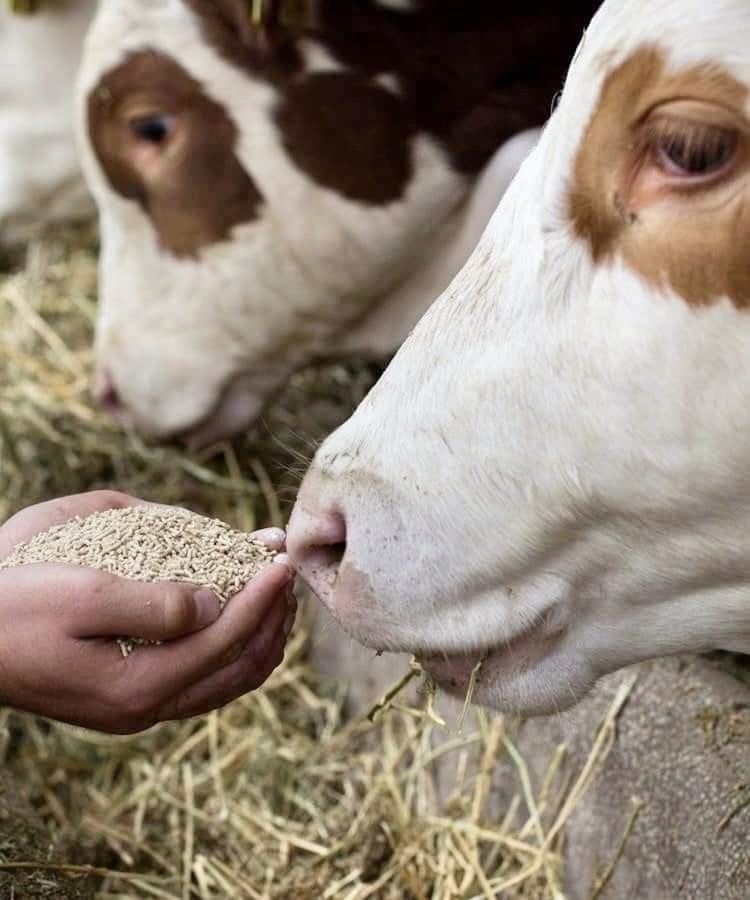
Animal feed is arguably the single biggest lever on livestock productivity, and Africa's feed industry is scaling up fast — output grew an estimated 11.5 percent last year, the strongest regional growth worldwide, driven by increasing commercialization and greater use of compound feed rather than raw fodder alone.
But there's a catch. An estimated 70 to 85 percent of feed-grade amino acids, vitamins, and specialty additives used in Africa are still imported, mostly from China, the European Union, and Southeast Asia — leaving the sector exposed to global price swings and shipping disruptions. Poultry feed dominates demand, making up close to half of total volume, with ruminant feed and a fast-growing aquafeed segment behind it.
Companies are starting to respond by localizing production rather than just shipping in finished feed. DSM-Firmenich has built feed premix facilities in Egypt specifically to cut delivery times for customized feed blends, while global players like Nutreco have expanded their African presence through acquisitions in South Africa's feed and probiotics market. In Nigeria, Lagos State rolled out a feed subsidy programme for poultry and fish farmers to soften rising input costs — a sign that governments, not just companies, are treating feed affordability as a productivity issue worth intervening on directly.
Sponsored
Nowhere is the feed challenge more visible than in Ghana's semi-arid north, where prolonged dry seasons and erratic rainfall severely limit both the quantity and quality of livestock feed available for much of the year, leading to low productivity and real animal losses. A partnership between the University of Nottingham's Food Systems Institute and University for Development Studies Ghana is now working to build more climate-resilient feed systems for the region, focused on improving forage quality through on-farm trials and direct farmer training — the kind of unglamorous, ground-level intervention that rarely makes headlines but directly affects whether a family's herd survives the dry season.
A second front is genetics. In February, the African Animal Breeding Network, together with the International Livestock Research Institute and the Centre for Tropical Livestock Genetics and Health, launched a major open-access publication on African livestock genetic resources — essentially a continent-wide case for breeding smarter using the genetic diversity Africa already has, rather than relying solely on imported breeds. The logic: indigenous and locally adapted breeds often carry built-in resilience to heat, drought, and disease that imported high-yield breeds lack, and pairing that resilience with better breeding science could lift productivity without sacrificing hardiness.
That thinking is playing out on the ground in Kenya, where researchers at the Kenya Agriculture and Livestock Research Organization are working to improve dairy genetics and nutrition side by side. Average yields there currently sit at around 2 gallons per cow per day, with the strongest regional herds reaching about 3 — researchers are working toward yields closer to 8 gallons, in line with North American dairy operations. Even modest gains matter enormously at the household level: with the right genetics and nutrition, a handful of milking cows can support an entire family's income.
Perhaps the most important shift is attitudinal. Many small-scale livestock farmers still associate "technology" with expensive machinery or software built for large commercial operations, and assume it's simply not for them — a mindset that keeps some farmers operating the same way for years, even when far simpler tools could save time and improve decisions. In reality, useful livestock technology increasingly includes low-cost, practical tools: basic record-keeping apps, simple health-monitoring routines, and improved feed and breeding practices that don't require six-figure investment.
The sector's momentum is set to be on full display later this year: VIV Africa's Kigali livestock and feed expo in October, alongside events in Nairobi and Tanzania throughout the year, are expected to draw feed manufacturers, breeders, and animal health companies from across the continent, signaling continued investor confidence in Africa's animal protein value chain.
For commercial and smallholder farmers alike, the throughline across feed, genetics, and everyday tools is the same: the highest-impact "technology" in African livestock farming right now often isn't a device at all — it's better information, better inputs, and the financing or training to actually use them.