Feed costs are the single biggest expense in most African livestock operations, and imported protein sources like fishmeal and soybean meal are only getting more exposed to global price swings. Increasingly, researchers and entrepreneurs across the continent are pointing to an unlikely fix crawling around in compost heaps: the black soldier fly.
A Protein Source Grown on Garbage
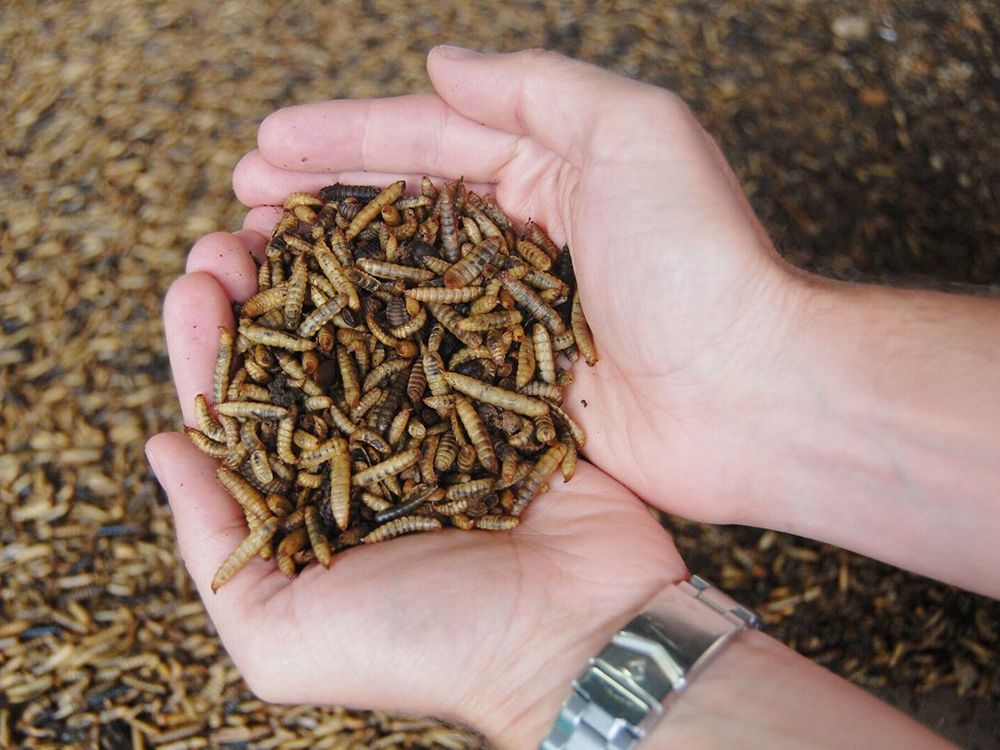
Black soldier fly larvae are voracious. Within their larval stage, they can consume large volumes of organic waste — food scraps, brewery byproducts, chicken manure — and convert it into body mass that's up to half crude protein by dry weight, with an amino acid profile that closely resembles fishmeal. For livestock farmers paying import-driven prices for conventional protein, that's a compelling proposition: a feed ingredient that's grown locally, from waste that would otherwise be discarded.
Research out of Kenya has demonstrated the concept works using exactly the kind of organic waste already available in African cities — chicken manure, brewers' spent grain, and household kitchen waste all produced usable, nutritious larvae when tested side by side. In Ethiopia, a partnership introducing black soldier fly farming is going a step further, working with private-sector partners to develop low-cost breeding cages suited to Ethiopian conditions and training farmers, policymakers, and other stakeholders on how the system works.
The Gap Between Potential and Practice
The scale of the untapped opportunity is striking. Current estimates suggest Africa produces only around 20,000 tonnes of black soldier fly larvae annually, against a potential capacity of roughly 3 million tonnes — meaning the continent is using less than 1 percent of what the waste streams alone could support. That gap matters because the global feed industry is bracing for a serious supply crunch: projections point to a shortfall of roughly 60 million tonnes of protein in the feed market by 2030, a gap insect protein is increasingly positioned to help fill.
Sponsored
South African insect-farming technology firms are pushing to close that gap with more sophisticated production systems. One approach uses modular, climate-controlled processing units designed specifically for African conditions, allowing organic waste to be converted into insect protein meal, insect oil for poultry and aquafeed, and a nutrient-rich soil additive — all processed close to where the waste is actually generated, rather than requiring centralized industrial facilities.
Why Farmers Haven't Adopted It Yet
Despite the promise, uptake on the ground remains low. A multi-country study surveying nearly 1,900 fish, poultry, and pig farmers across the Democratic Republic of Congo, Ghana, Mali, and Niger found that while roughly one in five farmers were aware of black soldier fly larvae as a protein source, actual adoption sat at just 4 percent. That gap between awareness and use points to the real barriers: unclear regulatory frameworks, limited access to reliable larvae suppliers, and uncertainty among farmers about how to safely incorporate the new feed into existing systems.
Food-safety researchers reviewing insect-based feed production across the continent have flagged this regulatory gap as a genuine concern — inconsistent substrate screening and a lack of clear standards mean quality and safety can vary significantly between producers, which in turn discourages the investment needed to scale the sector responsibly.
What It Means for Farmers
For poultry, fish, and pig farmers spending heavily on imported protein, black soldier fly larvae represent a potentially significant cost lever — but the sector is still in its early, uneven stages across most of the continent. Farmers considering insect-based feed should look for suppliers who can demonstrate consistent substrate sourcing and quality testing, rather than treating all insect meal products as equivalent. As regulatory frameworks mature and more processing capacity comes online, insect protein looks positioned to become a mainstream feed ingredient rather than a niche one — but for now, adoption is still catching up to the science.