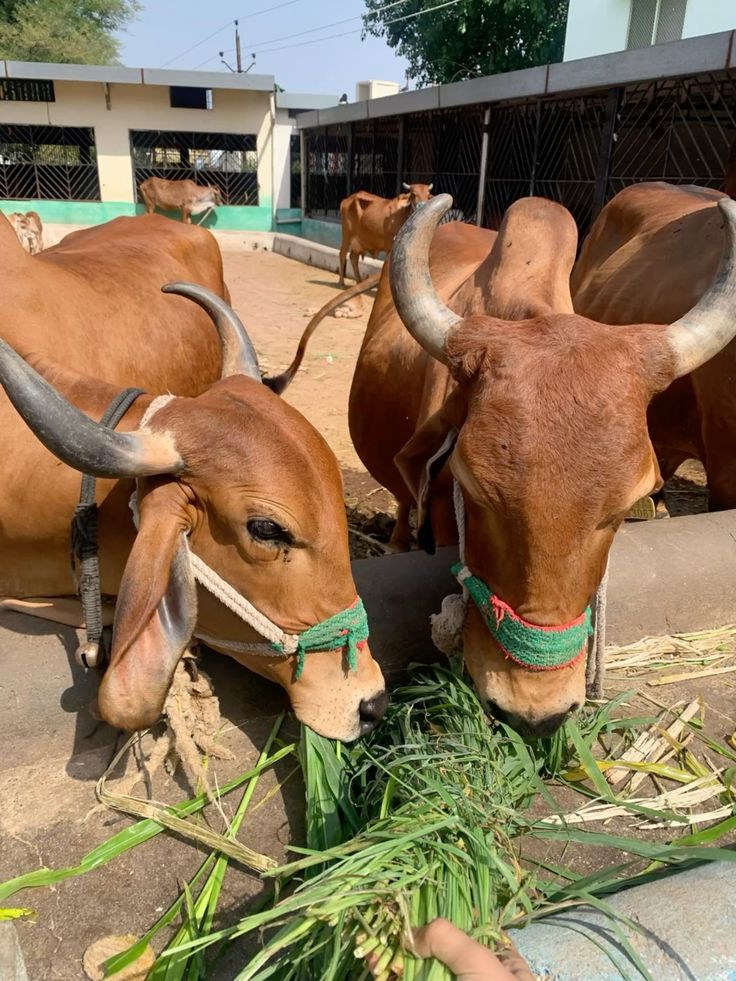
From Abuja to Addis Ababa, a continent-wide push is under way to turn Africa's livestock sector — already worth more than $210 billion a year — into a source of processed exports and jobs, rather than a supplier of raw animals that get value added somewhere else.
Livestock keeping is one of the oldest livelihoods on the African continent, and one of its most persistently under-leveraged. According to the African Union Inter-African Bureau for Animal Resources (AU-IBAR), the sector already generates more than $210 billion a year, yet many African countries remain heavily dependent on imported meat and dairy. "We continue to import products we could produce ourselves," AU-IBAR director Dr Huyam Salih told a panel at the ICC Kenya Business Summit earlier in 2026, framing the gap as a "billion-dollar opportunity" the continent has yet to seize.
Nigeria's $90 billion bet
Nowhere is that ambition more visible than in Nigeria, where industry stakeholders are pushing to unlock $3 billion in private investment over the next three to five years, with the goal of growing the national livestock economy into a $74–90 billion industry by 2035. The push gathered momentum at an April 2026 forum in Abuja convened under AU-IBAR's Africa Pastoral Markets Development Platform — an initiative backed by the Gates Foundation — where producers, processors, financiers and policymakers signed supply agreements aimed at unifying a value chain that has historically been fragmented between herders, traders and processors who rarely coordinate.
State-level deals are reinforcing the national push. In Katsina State, Governor Dikko Umaru Radda concluded a round of engagements with South African investors — including feedlot operators, abattoirs and halal meat processors — aimed at drawing foreign capital into the state's livestock value chain.
A continental strategy takes shape
The Nigerian push is part of a broader continental strategy. At the Africa Food Systems Forum in September 2026, agriculture and livestock ministers from Nigeria, Uganda, Niger, Mali, Malawi, Rwanda and Ethiopia met alongside former Botswana president Mokgweetsi Masisi to back AU-IBAR's Integrated Regional Livestock Value Chains programme — a ten-year initiative designed to connect pastoral herders to processing facilities, trade corridors, veterinary services and financing across regional blocs, rather than leaving each country to build a livestock economy on its own. Dr Salih described the pattern the programme is trying to break as Africa's "livestock paradox": short, one-off donor projects that fail to build the lasting regional markets the sector needs. The first phase targets a 10–15% increase in formal intra-African livestock trade in supported corridors by 2029, and AU-IBAR analysis suggests a coordinated, private-sector-led approach could unlock up to five times more value from the sector than the status quo.
Sponsored
Southern African Confederation of Agricultural Unions chief executive Ishmael Sunga has made a similar case for urgency, noting that animal agriculture already contributes between 30% and 80% of agricultural GDP in different African countries, and that East Africa alone earns more than $1 billion a year exporting live animals and meat to the Middle East and North Africa. His question to the sector, posed at a Wilson Center discussion, was blunt: with demand this strong, "so why wait?"
The numbers on the ground
Early signs of that shift are visible in national data. In Namibia, livestock marketing rose broadly in the first half of 2026, with cattle and sheep sales up on competitive pricing and live cattle exports climbing 47.4% year-on-year. In South Africa, goat farmer Albie Horn is pursuing a R1.2 billion ($65 million) intensive production and export strategy aimed at scaling up the country's goat meat value chain with the backing of investors and contract producers. In Kenya — home to the largest concentration of livestock keepers in the world, an estimated 7 million people — World Bank-backed financing is helping turn pastoralism into a more viable commercial investment, a shift officials hope can also create income opportunities for young graduates in a country where youth unemployment sits near 16%.
The barriers that remain
The obstacles are well documented. Health and safety standards continue to shut many African producers out of lucrative export markets, and the availability of affordable, high-quality animal feed remains a persistent constraint on productivity, according to analysis published by the Wilson Center. Without significant new investment, researchers warn, Africa could be sourcing as much as a fifth of its beef, pork, poultry and milk from outside the continent by 2050 — even as it sits on some of the world's largest livestock herds.
That is precisely the gap AU-IBAR, national governments and private investors are now racing to close — and industry watchers expect the next twelve months, with major continental gatherings like the Africa Agri Expo & FLIP in Tanzania already on the calendar, to show whether the investment pledges of 2026 translate into the processing plants, export deals and jobs the sector has promised for decades.
Farm and Livestock News Africa will continue following Africa's livestock investment story as new deals and data emerge.