Ask any potato farmer in East Africa what the hardest part of the job is, and many won't say the weather, or the market price, or even the labour. They'll say the seed.
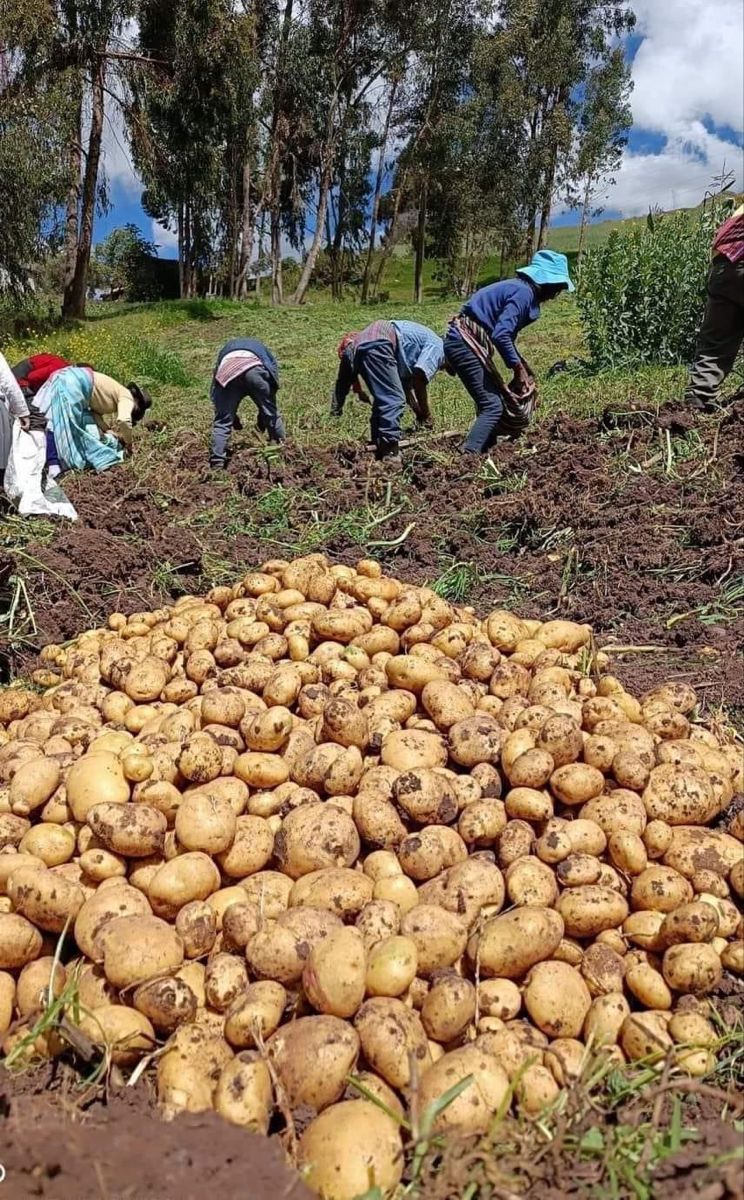
Unlike maize, beans or most other staple crops, potatoes are traditionally grown not from true seed but from seed tubers — small potatoes replanted from the previous harvest. It's a system with a fundamental flaw: those tubers carry diseases forward from season to season, they're bulky and expensive to transport, and a single hectare can require close to two and a half tonnes of planting material. For smallholders already stretched thin on capital, that's often the single biggest cost of the entire growing season, before a plant has even broken the soil.
Dutch agricultural technology company Solynta has spent more than a decade trying to make that problem disappear. In July 2026, it secured approval in Kenya for SOLHY023, the latest variety in its Hybrid True Potato Seed portfolio — and the milestone marks something bigger than a single new potato variety. Kenya remains the only country in the world where Solynta's true seed technology has full commercial release, making it the unlikely global testing ground for a technology that could quietly transform how one of the planet's most important food crops is grown.
From sacks to seed packets
The core innovation is almost deceptively simple. Instead of breeding and multiplying seed tubers, Solynta's hybrid breeding platform produces genuine botanical seed — the kind found in the small berries that potato plants occasionally form, rather than the tubers themselves. That seed is disease-free, compact, easy to store, and available year-round, sidestepping almost every structural weakness of the tuber system in one move.
The scale of that shift is hard to overstate. Where a hectare of conventional potatoes might need roughly two and a half tonnes of seed tubers trucked in, often across poor rural roads, the equivalent true seed for the same area can fit in something closer to an envelope. For a smallholder farmer, that means dramatically lower transport costs, none of the disease risk that comes with reused tubers, and — for the first time — a realistic path to storing planting material at home rather than sourcing it fresh, at a premium, every single season.
SOLHY023 adds a further layer of resilience to that promise: multiple genes conferring resistance to late blight, the fungal disease that has haunted potato growers since it triggered the Irish famine in the 1840s and remains one of the crop's most destructive threats worldwide, capable of wiping out entire fields within days under the wrong conditions.
Sponsored
More than 200 farmers, and counting
Since its first commercial release in Kenya in July 2025, Solynta says it has worked with more than 200 farmers across the country — a deliberately staged rollout spanning smallholder pilot growers testing the technology on small demo plots through to larger commercial operations planting at scale. That range matters: it means the technology is being stress-tested simultaneously against the realities of subsistence farming and the demands of commercial production, rather than being proven only in one context and assumed to translate to the other.
"Kenya continues to demonstrate what is possible when innovation is matched with strong local partnerships," said Charles Miller, Solynta's Director of Strategic Alliances & Commercial Development, of the SOLHY023 approval. The variety's release built on close collaboration with local agronomy testing partner Seeds2B, alongside Kenyan research institutions and regulators — the kind of unglamorous groundwork of trials, registrations and stakeholder buy-in that rarely makes headlines but ultimately determines whether an agricultural technology reaches real farms or stays confined to research plots.
Why the rest of the world is watching Kenya
Solynta is now active in more than 40 countries, running field trials, public-private partnerships and early commercial groundwork ahead of fuller market entry — but Kenya remains, for now, the only place in the world (outside a small European home-garden market) where the technology has moved fully into commercial release. That makes Kenyan farmers, in effect, the proving ground for whether hybrid true potato seed can work not just agronomically, but commercially and culturally, at scale.
The stakes extend well beyond one crop or one country. Potatoes are the world's third most important food crop for human consumption, and across sub-Saharan Africa, rising urban demand has made the crop an increasingly important source of both nutrition and farm income — provided growers can access healthy, affordable planting material in the first place, which conventional seed tuber systems have long struggled to guarantee. Solynta's backers, who include the European Investment Bank with a €20 million commitment toward the company's mission, are betting that solving the seed problem could unlock potato production gains across markets that have never had reliable access to clean seed tubers at all.
What comes next
For now, the transformation remains concentrated in Kenyan fields — a few hundred farmers, a handful of new varieties, one country where the regulatory and commercial pieces have fully clicked into place. But agricultural revolutions rarely announce themselves loudly at first. They look, at the start, like exactly this: a small company, a handful of approvals, and a growing number of farmers discovering that the hardest part of their season just got a great deal lighter — literally light enough to fit in an envelope.