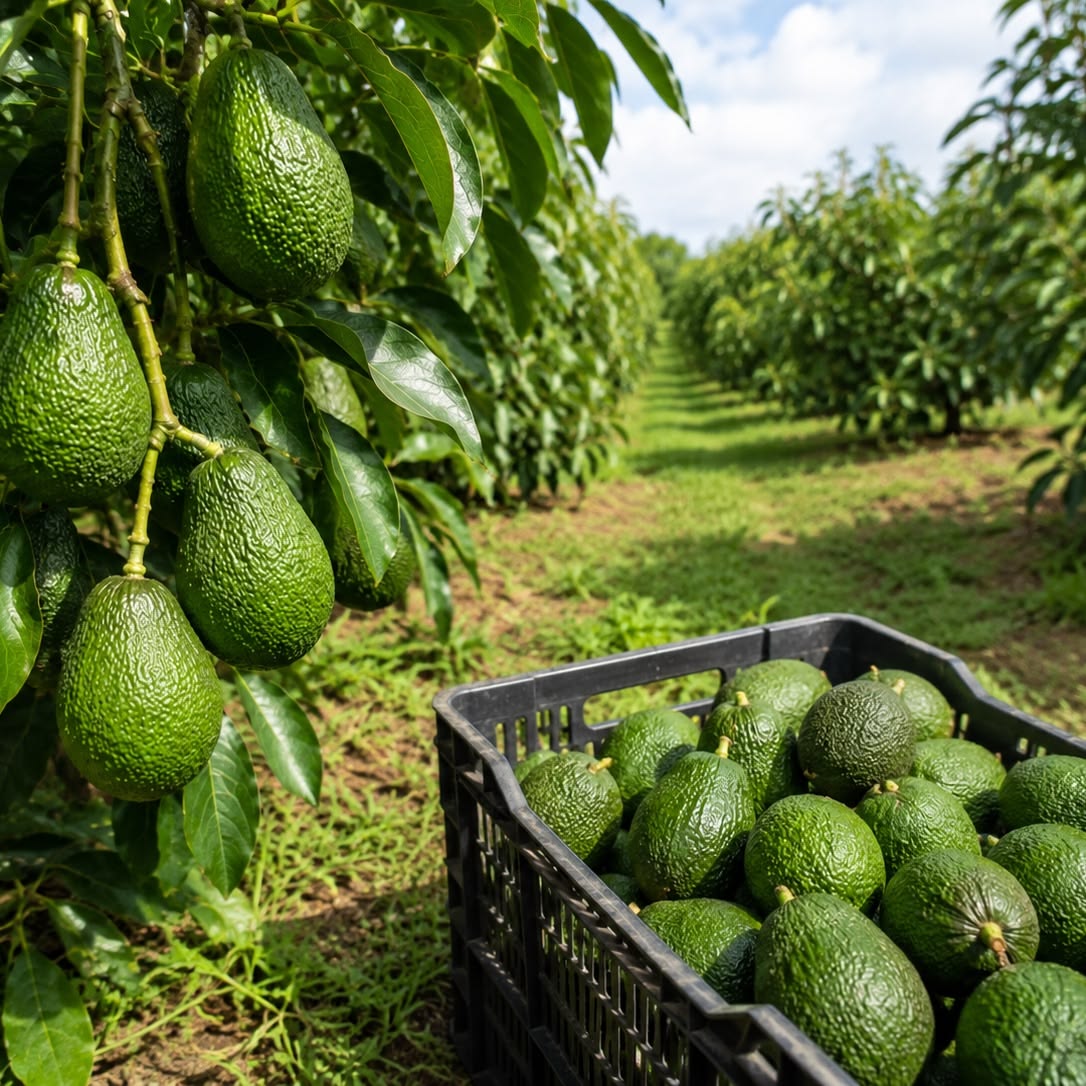
Kenya's avocado industry is on course for another record year, with production forecast to climb 4.8 percent in 2026 to approximately 727,000 tonnes, according to the latest US Department of Agriculture Foreign Agricultural Service assessment out of Nairobi. Exports are expected to grow even faster, rising 7.4 percent to around 130,000 tonnes as new markets open and post-pandemic shipping disruptions continue to ease.
The forecast builds on an already exceptional 2025, when Kenyan avocado production jumped nearly 19 percent to a record 694,000 tonnes — driven less by new orchards coming online overnight than by a combination of expanding harvested area, orchard maturation and a strong yield recovery in key growing regions after several difficult seasons.
From niche export to national cash crop
Avocado has become one of the clearest African success stories in high-value horticulture. Grown across more than 30 Kenyan counties, with Hass varieties dominating the export mix, the crop has moved from a relatively marginal export line into a genuine pillar of the country's agricultural economy. Kenya is now both Africa's leading avocado producer and its top exporter by volume — a position built over roughly fifteen years of orchard investment, grading infrastructure and market access work by growers, exporters and the Kenya Plant Health Inspectorate Service.
Smallholders account for the majority of the country's avocado area, meaning the boom has direct implications for rural household incomes, not just large commercial estates. Industry groups have pushed hard in recent years to formalise smallholder supply chains, improve post-harvest handling and reduce the share of fruit lost to poor grading or delayed transport to packhouses.
Processing is where the next growth is coming from
Sponsored
One of the more striking shifts in the data is the surge in avocado oil processing, which nearly tripled between 2024 and 2025, from roughly 3,326 tonnes to more than 10,000 tonnes, driven by rising demand for avocado oil in high-income cosmetics and food markets. That expansion matters strategically: it gives Kenyan processors a way to capture more value from lower-grade fruit that doesn't meet the exacting cosmetic standards required for fresh export, while diversifying revenue beyond the volatile fresh-fruit trade.
Domestic consumption is also climbing, now accounting for nearly half of total production, at around six kilograms per person annually — among the highest per-capita avocado consumption rates in Africa, even as many Kenyan households still consider the fruit a relative luxury.
Headwinds behind the record numbers
The growth hasn't been frictionless. Red Sea shipping disruptions and export controls imposed by Kenya's Agriculture and Food Authority to protect fruit quality standards caused 2025 exports to dip even as production hit record highs, illustrating how logistics and regulatory bottlenecks can cap the sector's ability to convert bumper harvests into export earnings. Fierce competition from other major producers, including Peru, Mexico and South Africa, also means Kenyan exporters cannot simply rely on volume growth; consistent quality and reliable cold-chain logistics into European and Middle Eastern markets remain the deciding factor in winning premium contracts.
What to watch next
With harvested area still expanding and orchards planted in the past five to seven years reaching peak productivity, Kenya's avocado output has room to keep climbing well beyond 2026. The bigger question for the industry is whether processing capacity, cold storage and export logistics can scale fast enough to keep pace — determining whether the "green gold" rush translates into durable rural income growth or gets capped by the same infrastructure bottlenecks that have constrained other African horticultural exports.