A major investment in agricultural transformation
Agriculture does not end when a farmer harvests a crop. What happens after harvest can determine how much value the agricultural sector retains, how many businesses grow and how affordable essential inputs become for other producers.
Benin is taking an important step towards strengthening these connections through a major investment in soybean processing and animal-feed manufacturing.
On 4 September 2026, EHUA Industries officially inaugurated a new agro-industrial complex at the Glo-Djigbé Industrial Zone (GDIZ). The facility represents an investment of approximately CFA28 billion (about US$50 million) and occupies eight hectares.
The development brings together two important industrial activities: soybean crushing and the manufacture of complete animal feeds. Its establishment is part of Benin's wider effort to increase domestic agricultural processing, create industrial opportunities and reduce reliance on imported animal-feed products.
According to GDIZ, the complex includes a soybean-processing unit capable of handling 300 tonnes of soybeans per day and an animal-feed manufacturing plant with an annual production capacity of 180,000 tonnes.
Why soybean processing matters to farmers Soybeans have become an important crop for agricultural economies because they serve several markets. They are used in food processing, oil production and animal nutrition, making them valuable to both crop producers and livestock businesses.
However, producing soybeans is only one part of the value chain. Farmers also need reliable buyers, competitive prices, storage facilities and processing industries capable of absorbing agricultural output.
The EHUA Industries complex is designed to strengthen this relationship by creating an additional domestic market for soybean producers.
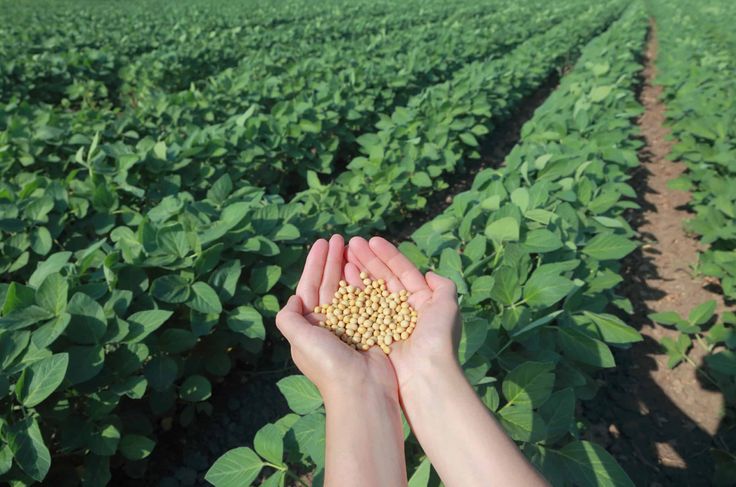
The company plans to source up to 100,000 tonnes of soybeans annually from Beninese farmers. These raw materials will be processed into crude soybean oil and soybean meal, a protein-rich ingredient used in animal-feed formulations.
This creates an opportunity for soybean producers to participate in a value chain that extends beyond selling unprocessed crops. Instead of depending entirely on raw commodity markets, farmers can potentially benefit from stronger domestic demand from industrial processors.
For this opportunity to translate into improved incomes, however, farmers will need consistent access to markets, suitable seed varieties, good production practices and transparent purchasing arrangements.
The connection between crop production and animal nutrition
One of the most important aspects of the investment is its focus on animal nutrition.
Feed is a major input in commercial livestock production. Poultry farmers, pig producers, cattle enterprises and other livestock businesses depend on nutritionally balanced feed to support animal growth, reproduction, productivity and overall performance.
Yet feed production requires a reliable supply of ingredients, particularly energy and protein sources.
Soybean meal is especially valuable because of its high protein content. When combined with other ingredients, it can form part of balanced rations for different livestock species.
The EHUA facility is designed to use soybean meal alongside locally available agricultural materials, including maize, rice bran, maize bran, cottonseed meal, palm oil and certain cashew-processing by-products.
The plant will manufacture feed products for broiler chickens, laying hens, pigs, rabbits and cattle, among other livestock categories.
This approach demonstrates how different agricultural activities can support one another. Crop farmers supply raw materials, processors convert them into higher-value products, and livestock producers use those products to raise animals for meat, eggs and other markets. An opportunity for poultry and livestock producers
For poultry farmers, feed availability and quality are particularly important because feed represents a substantial share of production costs.
Sponsored
When feed is expensive or inconsistent in quality, producers can struggle to maintain profitable operations. Poorly balanced rations can also affect growth rates, egg production and feed-conversion efficiency.
A larger domestic feed-manufacturing base could improve the availability of commercial feeds and give producers more purchasing options.
The same opportunity applies to piggery and cattle enterprises, where appropriate nutrition is essential for achieving productive and commercially sustainable operations.
However, increased manufacturing capacity does not automatically mean lower feed prices. The final cost to farmers will depend on soybean and maize prices, energy, transport, packaging, financing and the efficiency of distribution networks.
The long-term benefit will therefore depend on whether the new facility can supply consistent-quality feed at prices that farmers can afford.
Turning agricultural by-products into economic value
Another important feature of the complex is its use of agricultural by-products.
Materials such as rice bran, maize bran and certain cashew-processing residues can be incorporated into animal-feed formulations where their nutritional characteristics and quality are suitable.
This offers an opportunity to extract additional value from agricultural materials that might otherwise have limited commercial uses.
It also highlights the importance of connecting processing industries. A business processing rice or cashew nuts can potentially supply by-products to an animal-feed manufacturer, creating another market for its output.
For farmers and agribusiness investors, this presents opportunities beyond primary production. Feed blending, storage, transportation, ingredient supply, quality testing and distribution can all become important supporting businesses. Financing industrial growth
The development also demonstrates the role of financial institutions in supporting agricultural value addition.
The West African Development Bank (BOAD) approved financing of CFA4.5 billion towards the project in December 2024. Its project documentation identified soybean crushing and animal-feed production as important investments for strengthening Benin's agricultural and livestock value chains.
The involvement of development finance institutions and commercial banks is significant because agricultural processing facilities require substantial investment in machinery, infrastructure, energy and working capital.
For African countries seeking to develop competitive agricultural industries, access to appropriate financing is essential to moving beyond small-scale production towards larger processing operations.
What other African countries can learn
Benin's investment offers a useful example for other African agricultural economies, including countries with growing soybean, maize and livestock industries.
Across the continent, crop producers and livestock farmers are often treated as separate groups, even though their activities are closely connected. Crop production supplies the raw materials required for animal nutrition, while livestock markets create demand for agricultural commodities and processing services.
Developing these connections can help countries retain more value locally, create employment and reduce dependence on imported agricultural products.
However, the success of such investments depends on more than factory capacity. Strong relationships with farmers, dependable supplies of raw materials, effective quality-control systems, competitive pricing and reliable distribution networks are all necessary.
For Benin, the next important test will be how effectively the new complex translates its installed capacity into actual production, dependable markets for farmers and affordable feed for livestock producers.
The wider lesson is clear: a stronger agricultural economy is built when farmers, processors and livestock producers operate as connected parts of one value chain.