Rainfall Uncertainty Is a Production Challenge
For many African farmers, the success of a growing season depends heavily on when the rains begin, how regularly they fall and how long dry spells last. Even when total seasonal rainfall appears reasonable, an extended dry period during a critical stage of crop growth can affect yields. The risks are especially significant for households that depend on rain-fed agriculture and have limited access to irrigation, credit or alternative income. Poor harvests can reduce household food supplies, weaken farmers’ ability to repay loans and leave fewer resources available for the following planting season. Farmers cannot control rainfall, but they can make decisions that influence how effectively their fields use available moisture. Soil management, planting practices, crop choice and timely field operations are all part of this effort.
What Conservation Agriculture Involves Conservation agriculture is commonly associated with three principles: minimising soil disturbance, maintaining soil cover and diversifying crops through practices such as rotation. The way these principles are applied needs to reflect local soils, rainfall patterns, equipment, labour and farming systems. Reduced soil disturbance can help limit disruption to soil structure, while crop residues or other suitable cover can protect the soil surface. Crop rotation can interrupt some pest and disease cycles and improve the diversity of crops grown over time. In appropriate systems, these practices may also support soil moisture conservation and soil health. Conservation agriculture is not simply a matter of leaving a field unploughed. Farmers need to manage weeds, select appropriate planting methods, handle residues and monitor crop establishment. In some situations, additional labour, equipment or training may be required before benefits become apparent.
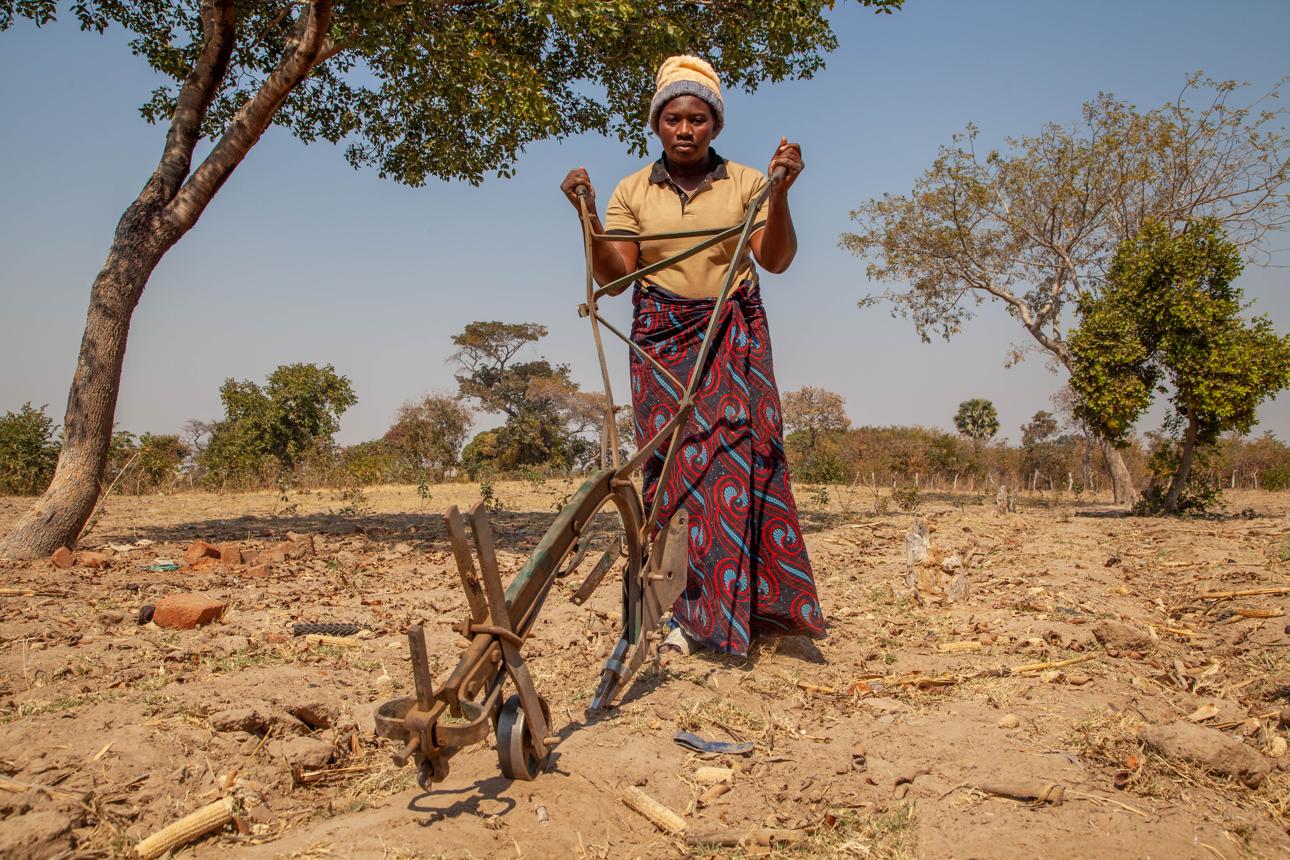
Evidence from Zambia’s On-Farm Research A study published in 2025 examined conservation agriculture across smallholder farms in Zambia using multi-year on-farm trials established between 2016 and 2021. The research compared maize grown in rotation with soybean under conservation agriculture with conventional maize monocropping managed according to local practices. It examined crop yield and selected soil properties. The study is relevant because evidence from farmers’ fields can help explain how agricultural practices perform under practical production conditions, rather than only in controlled experiments. It also highlights the importance of considering both crop output and soil characteristics when evaluating long-term farming approaches. However, results from a particular trial should not be treated as a guarantee of higher yields on every farm. Outcomes can differ with soil type, rainfall, weed pressure, crop rotation, management quality and the period over which practices are applied. Farmers should use local research and extension guidance when deciding whether and how to adopt conservation agriculture.
Sponsored
Managing Soil Moisture Before and During the Season Moisture management begins before a crop is planted. Farmers can assess field conditions, prepare planting materials and equipment in advance, and choose crop varieties suited to the expected growing season. Timely planting can help crops make better use of available rainfall, although the decision should be based on reliable local guidance rather than a single early shower. Maintaining suitable soil cover may reduce direct exposure of the soil to sun and rainfall impact. Where practical, farmers may also use contour measures, rainwater harvesting or other water-management approaches appropriate to the slope, soil and local environment. Weed management remains essential because weeds compete with crops for water, nutrients and light. In conservation agriculture systems, weed control may require different timing or methods from those used in conventional tillage. Farmers should plan for this requirement rather than assuming reduced tillage automatically means less work.
Choosing Crops and Varieties for the Growing Environment Conservation agriculture works best when combined with crop choices suited to local conditions. Depending on the area, farmers may consider early-maturing or stress-tolerant varieties, drought-adapted crops such as sorghum and millet, or legumes that fit the rotation and market plan. The decision must balance production risk with household and commercial needs. A crop that performs well under limited moisture may still be unsuitable if seed is unavailable, local consumers do not buy it or the farmer lacks access to a profitable market. Diversification can spread some risks, but it requires planning. Farmers should consider seed supply, planting windows, labour availability, storage and potential buyers before introducing a new crop on a significant scale.
Barriers to Adoption Need Practical Solutions Farmers may face several obstacles when adopting conservation agriculture. These can include limited access to suitable equipment, shortages of crop residues where residues are used for livestock feed, weed-management difficulties, insufficient training and uncertainty about the time required to see benefits. Extension services and farmer demonstration plots can help address these challenges by showing how practices are implemented under local conditions. Farmer groups can also share equipment, organise training and exchange experiences, although shared arrangements require clear responsibilities and maintenance plans. Financial support may be useful during the transition, particularly where farmers need to acquire equipment or adapt their production systems. Any support programme should be based on local needs and accompanied by practical advice.
Resilience Requires a Combination of Practices No single farming method can eliminate the risks associated with drought or irregular rainfall. Conservation agriculture is most useful when considered alongside suitable seed, balanced nutrient management, timely planting, integrated weed and pest control, reliable weather information and access to markets. For farmers, the goal is to build a production system that manages available resources more effectively and can adapt to changing conditions. For governments, researchers and agribusinesses, the task is to make suitable technologies, training and inputs accessible to farmers who need them. As African agriculture faces greater pressure to produce food under variable weather conditions, locally tested soil and water management practices will remain important. The priority is to identify which combinations work best in each farming environment and help farmers adopt them sustainably.