The adoption of farm management software is growing across the agricultural sector, with digital platforms increasingly promoted as tools for improving efficiency, record-keeping, and decision-making. However, industry experts caution that technology alone cannot solve operational challenges if farmers lack reliable data and consistent management systems.
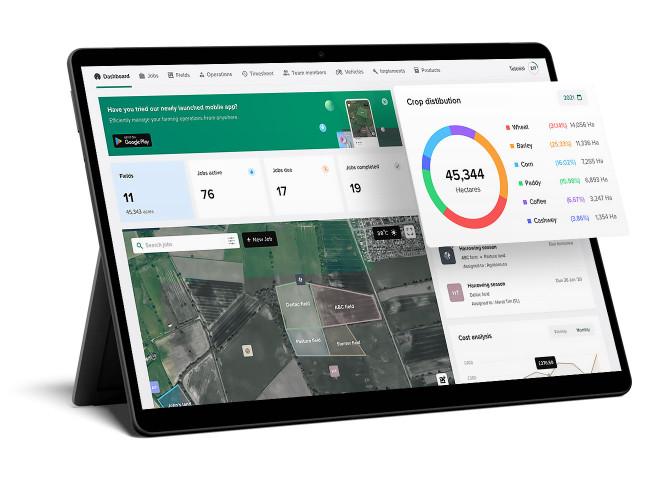
Farm management software is designed to centralise farm operations by recording production activities, monitoring costs, tracking crop and livestock performance, and generating reports that support decision-making. More advanced platforms can also integrate weather information, soil data, market prices, and livestock health records.
Agricultural technology specialists say the greatest benefit of these systems is their ability to transform scattered farm activities into measurable data. By improving record-keeping, farmers can track costs more accurately, compare performance across seasons, and identify inefficiencies that may otherwise go unnoticed.
The software also helps improve planning and operational discipline. Farmers can schedule planting, harvesting, fertiliser applications, irrigation, and other critical activities more effectively, reducing missed operations and improving coordination across farming enterprises.
Financial management is another area where digital tools provide value. Farm management platforms allow users to analyse profitability, compare input costs against production outputs, and identify areas where resources may be wasted. This enables more informed business decisions and stronger financial oversight.
Sponsored
Despite these advantages, experts note that software systems depend heavily on consistent and accurate data entry. Farms with poor record-keeping practices often struggle to generate meaningful insights because incomplete information leads to unreliable reports and inaccurate recommendations.
Adoption rates also vary significantly between commercial farms and smallholder producers. Large-scale operations generally benefit more due to structured management systems and dedicated staff responsible for data collection. Smaller farms, however, often face challenges including limited digital literacy, inadequate access to devices, and concerns about software costs.
Industry observers argue that one of the biggest misconceptions is the belief that software directly increases productivity. In reality, digital platforms improve visibility, planning, and decision-making, but actual productivity gains depend on how effectively those decisions are implemented on the ground.
Across many African farming systems, partial adoption remains the norm. Farmers frequently use digital tools for basic record-keeping or financial tracking while continuing to rely on paper-based systems for other operations.
Experts emphasise that agriculture remains a highly execution-driven industry influenced by weather conditions, biological processes, labour management, and market fluctuations. While software can reduce uncertainty and improve planning, it cannot eliminate production risks.
As digital agriculture continues to expand, specialists are encouraging farmers to adopt realistic expectations. They argue that farm management software delivers the greatest value when integrated into well-organised farming systems supported by disciplined data collection and consistent operational practices.