In a world where technology continues to advance across every industry, it is increasingly important for countries to invest heavily in the agricultural sector by integrating traditional farming methods with modern technology.
Agriculture, if properly funded and modernized, has the potential to reduce the cost of basic commodities and significantly improve living standards. In many developing economies, it is often argued that agriculture should be prioritized just after mineral resources due to its ability to drive inclusive economic growth.
Across Africa, one country stands out for its strong investment in agricultural innovation and technology. Known as the “Land of the Pharaohs,” Egypt is located in the northeaster corner of Africa and is a transcontinental nation, spanning both Africa and parts of the Middle East.
Although about 90% of Egypt’s landmass is desert, the country is historically and agriculturally significant. Geographers typically divide its terrain into three major regions: the Western Desert, the Eastern Desert, and the Sinai Peninsula.
Research shows that agriculture in Egypt began around 6000 BCE in the fertile Nile Delta and Faiyum regions. For thousands of years, farmers depended on the annual flooding of the Nile River, which deposited nutrient-rich silt onto farmland. Early farmers cultivated staple crops such as emmer wheat and barley and used traditional irrigation tools like the shadouf to water their fields. Today, Egypt is emerging as a leader in agricultural technology and innovation in Africa.
In a major step toward smart farming, Egyptian start-up Egrobots recently developed the Arab world’s first AI-powered agricultural robot. The autonomous machine is designed to harvest crops such as tomatoes using artificial intelligence and computer vision technology. It can identify ripe produce, navigate farms without human control, and operate for long hours, reducing the need for manual labour.
This innovation reflects Egypt’s growing commitment to modernizing agriculture through digital technology and sustainable food production systems.
Egypt has also become a pioneer in aquaculture development in Africa through a long process of innovation and expansion. Historical evidence shows that tilapia farming dates back more than 4,000 years to ancient Egyptian civilization, with depictions found in tomb murals from around 2500 BCE.
Sponsored
Modern aquaculture began developing in the mid-20th century, when the first commercial fish farm was established in 1954. A major breakthrough came in the 1990s with improved feed systems and monosex (sex-reversed) tilapia farming, which significantly increased productivity.
Tilapia is a freshwater fish native to Africa and the Middle East. It is one of the most widely farmed fish globally due to its hardiness, fast growth, and adaptability. In many African countries, it is often referred to as the “chicken of the water.” By the early 2000s, Egypt had become Africa’s leading aquaculture producer. Today, it accounts for approximately 69% of Africa’s total aquaculture production. Output increased from about 62,000 tons in 1990 to more than 1.64 million tons by 2019. Egypt is now the third-largest tilapia producer in the world, after China and Indonesia.
Hydroponics and Smart Irrigation Systems are another major advancement in Egypt’s agricultural transformation is the adoption of hydroponics and smart irrigation systems.
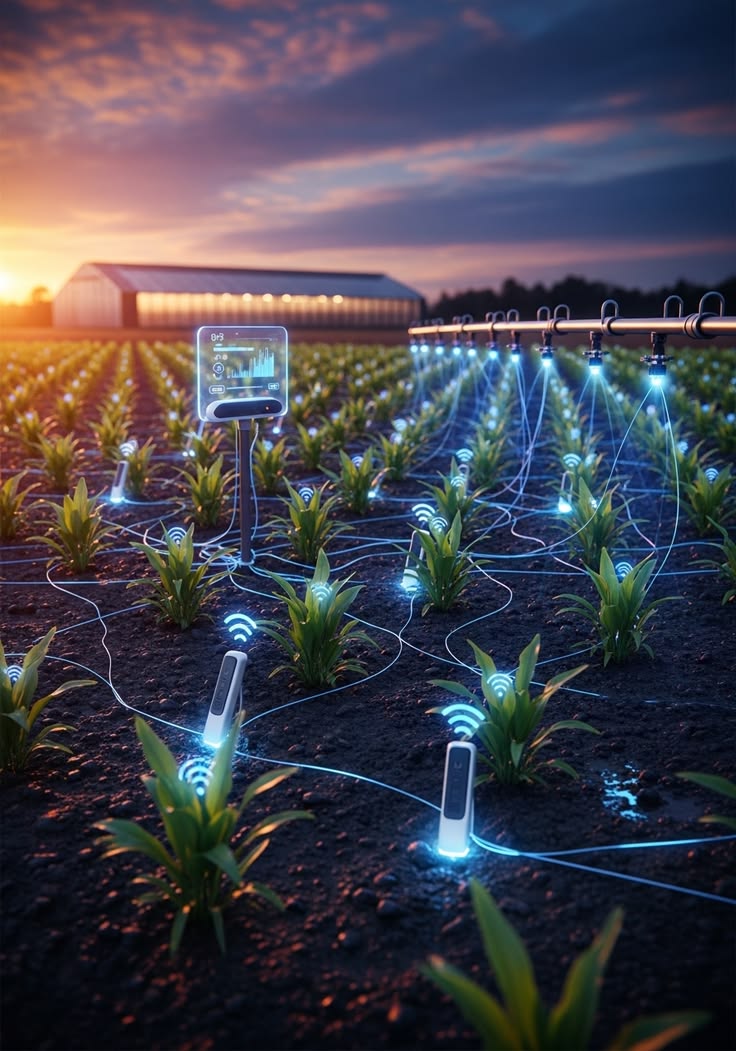
Hydroponics is a method of growing plants without soil, where roots are supplied with nutrient-rich water solutions. This system is particularly useful in Egypt due to limited fertile land and water scarcity. Egypt began adopting modern drip irrigation systems in the 1990s as part of national efforts to reduce reliance on traditional flood irrigation, which placed heavy pressure on Nile water resources.
From the 2010s onward, the country introduced advanced technologies such as soil moisture sensors, automated irrigation systems, and satellite-based crop monitoring. These innovations are now widely used in large-scale desert farming initiatives, including the “1.5 Million Feddan” project.
On May 17, 2026, the President of Egypt praised the country’s agricultural achievements during the inauguration of the New Delta project. He stated that “what Egypt has achieved in the agricultural sector represents a source of pride for all Egyptians” and emphasized that “the Egyptian people are the true owners of this achievement.”
The event marked the launch of a 2.2-million-feddan land reclamation project aimed at strengthening food security and expanding agricultural production.
Egypt’s agricultural journey demonstrates how innovation, technology, and strategic investment can transform even the most challenging environments into productive farming systems. From ancient Nile-based agriculture to modern AI-powered farming and smart irrigation, Egypt continues to position itself as a leader in agricultural transformation.
Its experience offers an important lesson for other African countries: with the right investment and innovation, agriculture can become a powerful driver of economic growth, food security, and sustainable development.