Rwanda has put a price tag on its next phase of agricultural transformation: roughly 7 trillion Rwandan francs, or about $4.76 billion, the estimated cost of implementing the country's fifth Strategic Plan for Agriculture Transformation, known as PSTA-5.
The plan, which guides Rwanda's agriculture policy and investment priorities, positions the sector not simply as a source of food and rural livelihoods but as an engine for broader economic growth — pulling in private capital, digital tools and export-oriented value chains rather than relying primarily on subsistence production.
From food security to full-blown industry
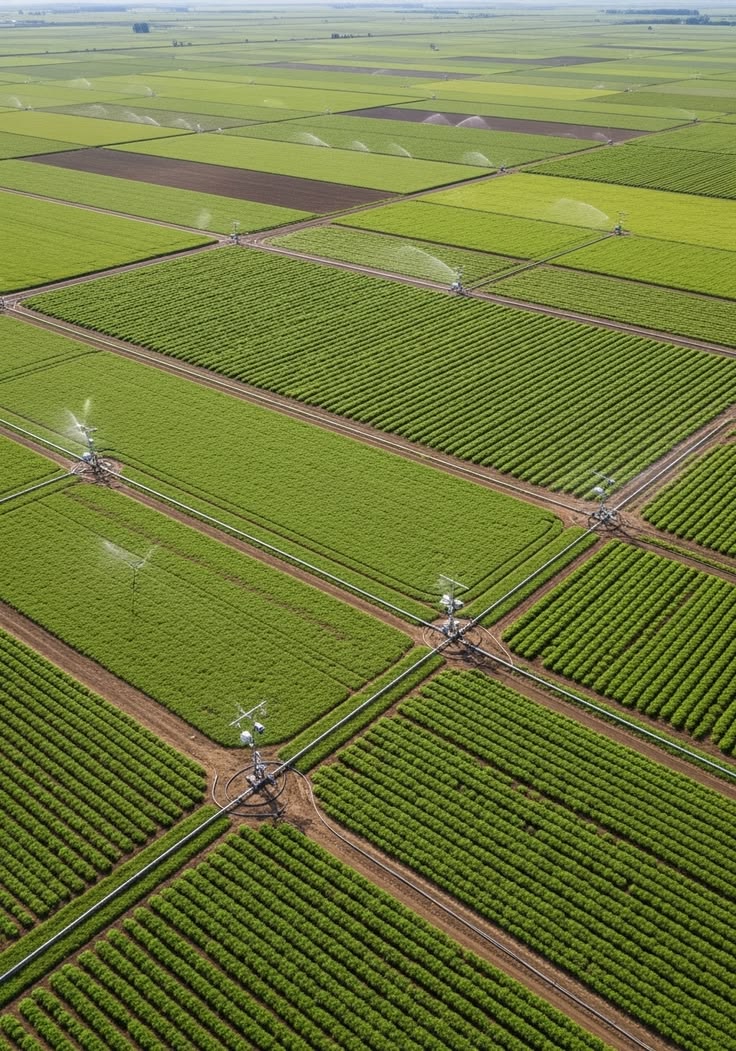
Rwanda has spent the past two decades methodically building out an agriculture sector that punches above its weight for such a small, land-constrained country, with well-known success stories in coffee, tea and horticulture exports. PSTA-5 is designed to push that transformation further, focusing on climate resilience, irrigation expansion, mechanisation, agro-processing capacity and stronger links between smallholder producers and commercial buyers.
The scale of the projected cost — nearly $4.76 billion — signals that the government expects the bulk of implementation to be financed jointly by public budgets, development partners and private investors, rather than the state alone. That mirrors a pattern playing out across the continent, where national agriculture strategies increasingly function as investment prospectuses as much as policy documents, designed to give financiers a clear signal of where a government wants capital to flow.
Where the money is expected to go
Sponsored
While the full financing breakdown continues to be worked out with development partners, strategies of this kind typically direct capital toward a recognisable set of priorities: expanding irrigated land to reduce dependence on rainfall, building storage and processing infrastructure that lets farmers capture more value from their harvests, strengthening seed and input systems, and digitising extension services so smallholders can access market information and credit more easily.
For Rwanda specifically, continued investment in high-value export crops — coffee and tea in particular — alongside horticulture for regional markets is expected to remain central, given the foreign exchange and rural income these subsectors already generate.
Why investors are watching
Rwanda has cultivated a reputation among development finance institutions and impact investors as one of the more predictable operating environments in the region, with relatively low corruption perceptions and a government track record of following through on stated agricultural plans. A large, clearly costed strategy like PSTA-5 gives investors a menu of specific entry points — from agro-processing facilities to irrigation infrastructure — rather than a vague commitment to "supporting agriculture."
That specificity matters. Much of the private capital that has stayed on the sidelines of African agriculture in recent years has cited the same complaint: a lack of clearly bankable, de-risked projects to invest in. Strategies that come with a defined implementation cost, a set of named priorities and a government willing to co-finance early risk make it easier for private investors to underwrite deals with confidence.
The bigger picture
Rwanda's plan lands as several African governments simultaneously court agricultural investment — from Angola's $1.45 billion World Bank-backed framework to Ethiopia's push for its first private fertiliser plant. What sets PSTA-5 apart is less its size than its intent: turning a small, densely populated country's farmland into a genuinely industrial sector, with commercial returns to match the development goals. Whether Rwanda can mobilise the private half of that $4.76 billion equation will be one of the more closely watched agribusiness stories on the continent over the next several years.