The Hatchery Equipment Backbone
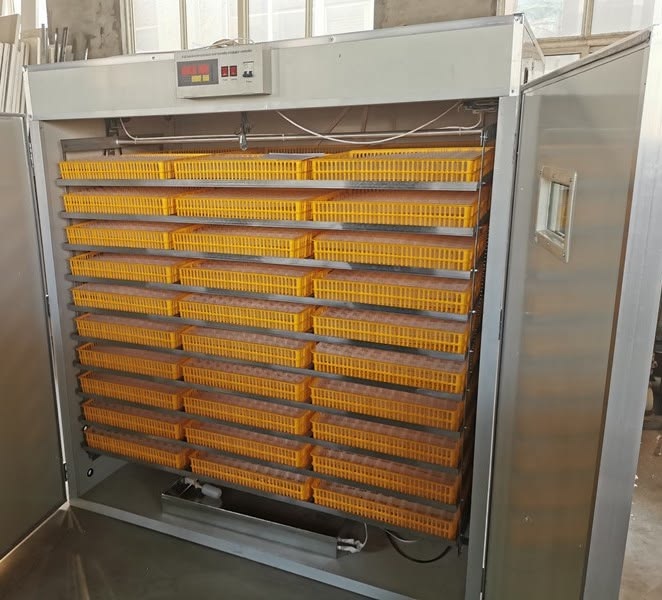
South Africa has emerged as the continent's most developed hub for poultry equipment supply, anchored by companies that have spent decades building out the specialized infrastructure commercial hatcheries depend on. Hatchery Equipment Suppliers, established in 1982 and now marking more than 40 years in the industry, represents Ohio-based Chick Master Incubator Co and Egg Chick Automated Technologies across Southern Africa, providing everything from hatchery design and layout to incubation systems, climate control, and ventilation management for operations ranging from small-scale hatcheries to large commercial facilities. According to the company, Chick Master incubators dominate the Southern African market, supported by a network of locally trained engineers who service the majority of the region's installed incubator base.
Surehatch, another South African supplier, has built a broader product ecosystem beyond incubation alone — supplying poultry drinkers, feeders, brooders, egg-laying cages, egg graders and washers, processing equipment, and nest boxes under its SureGrow, SureLay, SureGrade, SureProcess, and SureNest product lines. The company's reach extends well beyond South Africa's borders: farmers in Zimbabwe and other neighbouring markets have publicly credited Surehatch's equipment for helping sustain profitable hatchery operations, citing the durability and performance of its incubator units under real-world commercial conditions.
Why Reliable Equipment Matters More in Africa
Industry analysts tracking the global incubator manufacturing sector note that traditional manual incubation methods typically achieve hatching success rates below 75 percent, while power infrastructure instability — a persistent challenge across many African markets — can result in complete batch losses if incubation equipment lacks adequate backup power systems. That reality has made energy resilience a defining feature of the equipment increasingly favoured by African hatchery operators: backup power protection, precise temperature and humidity control, and durable construction capable of withstanding inconsistent grid conditions have become baseline requirements rather than premium features.
Sponsored
Delta Incubators, a South African supplier offering equipment for chicken, duck, guinea fowl, and quail eggs alongside brooders, feeders, drinkers, and feed production equipment, has positioned itself around exactly this kind of all-in-one reliability — supplying what it describes as the complete gear needed to take a poultry operation from hatch day to feed day, with countrywide delivery designed to reach farmers well beyond South Africa's major urban centres. Similarly, Kenya-based Ecokukufarm markets its incubators specifically around high hatch rates, durable construction, and backup power protection against outages — a product positioning that reflects what East African poultry farmers have identified as their most pressing equipment priorities.
The Push Toward Local Manufacturing
Industry analysts covering the sector's growth trajectory point to local fabrication of equipment — incubators, brooders, and feeders manufactured within Africa rather than imported — as an increasingly important cost-reduction strategy for the continent's expanding poultry industry. Reducing dependence on imported equipment not only lowers upfront capital costs for new hatcheries and farms, but also shortens the supply chain for spare parts and repairs, addressing one of the recurring challenges that has historically slowed commercial poultry expansion in markets far from major equipment manufacturing hubs.
That shift toward local capacity is happening alongside continued interest from major international manufacturers. Companies including Big Dutchman, Italy's BEST hatchery equipment specialists, and India's Bala Industries — part of the globally significant Venkateshwara Hatcheries Group — have all maintained an active presence at Africa's leading poultry technology trade events, underscoring how seriously established global players are treating the continent's growing commercial poultry market as a genuine expansion opportunity rather than a peripheral one.
What This Means for Africa's Poultry Ambitions
The equipment layer of Africa's poultry value chain rarely draws the same attention as headline investment announcements like Ethiopia's Nutropia-Agrotop mega-hatchery project or Nigeria's industrial poultry buildout under its National Livestock Modernization Plan — but it's the infrastructure that determines whether those larger ambitions are actually achievable. A vertically integrated poultry operation is only as reliable as its incubation and hatchery systems, and as more African countries pursue large-scale poultry expansion to meet rising protein demand, the continent's equipment suppliers — from established South African hatchery specialists to a growing base of local manufacturers — are increasingly central to whether that expansion translates into consistent, affordable chicken meat reaching African households.