
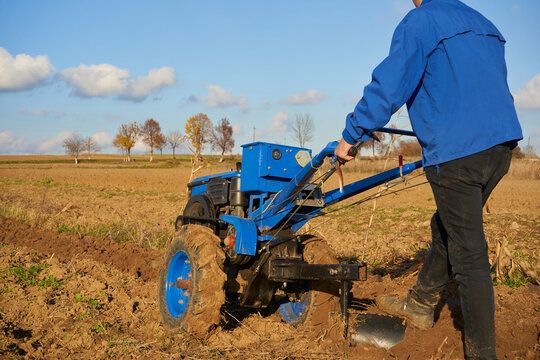
When policymakers, private sector actors and youth representatives gathered in Dar es Salaam in February 2026 for the first Africa Regional Conference on Sustainable Agricultural Mechanization, the consensus that emerged ran counter to decades of conventional mechanization thinking: the future of African farm machinery isn't more large tractors distributed through government subsidy schemes — it's scale-appropriate equipment delivered through viable, youth-run service businesses.
The distinction matters more than it might first appear. Large-tractor subsidy programmes, a staple of agricultural policy across the continent for years, have repeatedly struggled with the same problems: high upfront capital costs, maintenance and spare-parts logistics that outstrip rural infrastructure, and machinery poorly matched to the small, fragmented landholdings that characterise most African farms. The alternative gaining traction — sometimes called Sustainable Agricultural Mechanization, or SAM — spans everything from simple hand tools to two-wheel tractors, planters, threshers, small harvesters and irrigation pumps, deliberately sized and priced for the realities of smallholder agriculture.
Solving two problems with one model
The service-based approach addresses a timing problem as old as farming itself: when the rains arrive across sub-Saharan Africa, farmers have only a narrow window to prepare land before yields start falling, and missing the harvest window means losing crops outright. Owning machinery outright has never made economic sense for most smallholders farming just a hectare or two — the equipment would sit idle most of the year. Mechanization-as-a-service, where an operator owns equipment and hires it out on a per-use basis to multiple farmers in a district, solves the utilisation problem while still giving smallholders timely access to machinery precisely when they need it.
The second problem it solves is employment. Sub-Saharan Africa has the world's youngest and fastest-growing population, projected to double by 2050, with millions of young people entering the labour market annually and limited formal employment available to absorb them. A mechanization service business doesn't require owning land — the traditional barrier to entry in agriculture — just access to financing for the machinery itself, typically through a leasing arrangement that lowers the upfront capital burden dramatically compared to outright purchase.
Learning from Bangladesh's model
Sponsored
Several African countries, including Ethiopia, Ghana, Kenya and Nigeria, have actively studied Bangladesh's mechanization experience, where two-wheel, single-cylinder diesel tractors became a foundation for rural mechanization precisely because of their versatility — the same engine can be adapted to power well pumps, threshers, mills and river transport in addition to field operations, spreading the capital cost of ownership across multiple income-generating uses.
In Ethiopia specifically, the International Maize and Wheat Improvement Center (CIMMYT) has worked with microfinance institutions including Waliya Capital Goods Finance in Amhara region and Oromia Capital Goods Lease Finance to pilot machinery leasing schemes, addressing the financing gap that has historically kept two-wheel tractors out of reach for individual smallholders who lack the collateral banks typically require.
What still needs to happen
For the service-business model to scale beyond pilot projects, conference delegates in Dar es Salaam pointed to a familiar set of requirements: reliable access to credit for aspiring young machinery operators, functioning spare parts and repair networks in rural areas, and land tenure systems secure enough that farmers hiring services can plan investments with confidence. Governments, meanwhile, face a genuine trade-off: shifting away from politically popular tractor giveaway programmes toward less visible but more sustainable service-business ecosystems requires patience that election cycles don't always allow.
The bigger shift underway
What's happening in African mechanization policy right now reflects a broader recalibration across the continent's agricultural development thinking — a move away from importing solutions built for large, mechanized farms in other parts of the world, toward building financing and service models specifically fitted to Africa's fragmented, smallholder-dominated farm structure. If the youth-led service model proves out at scale, it could simultaneously advance food security goals, rural employment and government budgets — without a single large tractor subsidy cheque being written.