Few animal health crises have hit South Africa's agricultural economy as hard, or as fast, as the foot-and-mouth disease outbreak that intensified late last year and rapidly spread across the country's livestock industry. By the time mass vaccination began in earnest, the numbers told a stark story: more than 297,000 cattle affected, over 120,000 animals culled in containment efforts, and export bans imposed by China, Mozambique, Zimbabwe, Namibia, and Eswatini.
A National Disaster, Declared
In January, Agriculture Minister John Steenhuisen announced he would ask Cabinet to formally declare foot-and-mouth disease a national state of disaster — a designation that unlocks faster government coordination, additional resources, and stronger enforcement powers to fight the outbreak. Delivering the State of the Nation Address, President Cyril Ramaphosa confirmed the scale of the response: government would vaccinate the national herd of at least 14 million cattle, requiring 28 million vaccine doses over the following 12 months, procured centrally by the state to ensure the correct strain-matched vaccine reached the right regions.
The urgency was hard to overstate. Foot-and-mouth disease is a highly contagious viral infection affecting cloven-hoofed animals, and outbreaks were confirmed across five, and eventually six, of South Africa's nine provinces, with KwaZulu-Natal identified as the hardest-hit region. When an outbreak hit Karan Beef's feedlot in Heidelberg — the country's largest, slaughtering roughly 2,000 cattle daily — the resulting quarantine underscored just how directly the disease threatened national beef supply, not just individual farm livelihoods.
Rolling Out the Vaccine
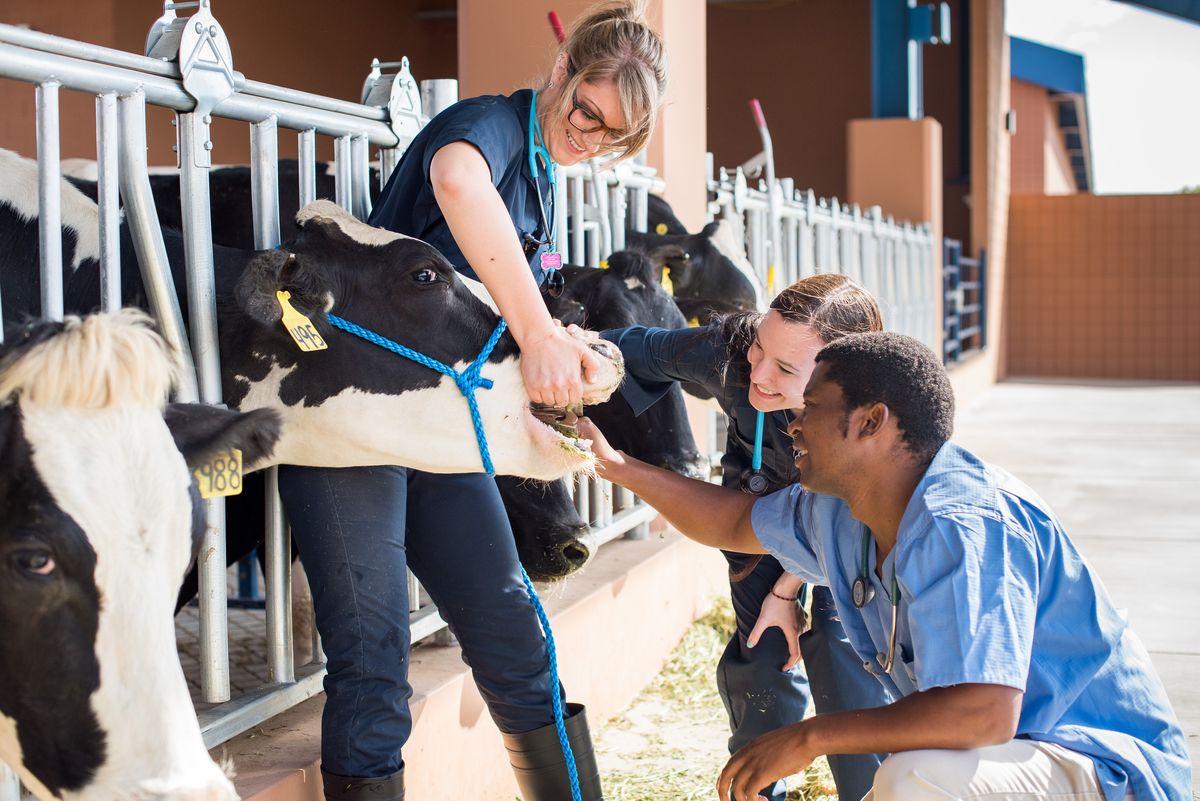
Mass vaccination formally began at the Karan Beef feedlot in Heidelberg, with the first million doses arriving from Turkey as government worked to secure additional supply. By the end of January, nearly 2 million animals had already been vaccinated, with further mass campaigns planned for the hardest-hit provinces — KwaZulu-Natal, Gauteng, Free State, and North West — and a second round of vaccinations planned within three months to protect feedlots, dairy herds, and both commercial and communal livestock.
Minister Steenhuisen framed the strategy plainly: the goal was to get ahead of the disease through prevention rather than continuing to react to outbreaks as they occurred. Government secured 1 million vaccine doses for near-term delivery, with a further 5 million doses secured by March, though officials acknowledged early on that supply volumes were running well short of what would ultimately be needed to vaccinate close to 12 million cattle.
Sponsored
The Ripple Effects Beyond the Herd
The economic damage extended well past the animals themselves. Between January 2024 and January 2026, more than 90 South African dairy farms reported FMD cases, affecting over 210,000 cattle. Industry leaders described the impact as cascading through the entire value chain — Agbiz CEO Theo Boshoff characterized it as creating a wide ripple effect touching livestock farmers, dairy operations, and businesses well beyond the farm gate.
Export bans compounded the pressure. While the Department of Agriculture noted that Zambia's suspension of South African agricultural imports would have limited direct economic impact given relatively low trade volumes, officials acknowledged real concern that other trading partners might follow Zambia's lead — a risk that made restoring FMD-free status, and the trade confidence that comes with it, a genuine national priority rather than simply an animal health matter.
A Manufacturing Milestone
In a significant boost to long-term supply security, South Africa restarted local production of FMD vaccines in early 2026 for the first time in 21 years, with the first batch of vaccines produced at the Agricultural Research Council's Onderstepoort Veterinary Research campus. The country had ceased domestic vaccine production years earlier after its manufacturing infrastructure fell out of compliance with international Good Manufacturing Practice standards — meaning this restart represents not just an emergency response, but a rebuild of core national biosecurity infrastructure that had quietly atrophied over two decades.
What It Means for Farmers
For South African cattle farmers, the practical takeaway is that vaccination access and timing now directly determine whether herds can move, whether feedlots can operate normally, and whether export markets stay open. With repeat vaccination rounds planned and local manufacturing capacity coming back online, the supply constraints that marked the campaign's early months should ease — but farmers in provinces still working through active outbreaks will want to stay closely engaged with government vaccination scheduling rather than assuming the crisis has already passed.