Ghana Wants More Chicken Produced at Home
Ghana is putting domestic poultry production back at the centre of its agricultural and food-security agenda.
Through its Poultry Farm-to-Table Initiative, the government is seeking to increase local poultry production while reducing dependence on imported poultry and creating stronger connections between farmers and consumers.
The initiative is designed to provide farmers with access to credit, affordable feed, training and improved broiler breeds, while linking producers more directly to consumers.
Why the Farm-to-Table Model Matters
Poultry production is not simply about raising chickens.
A farmer needs chicks, feed, vaccines, housing, water, electricity, finance and a reliable market.
If one part of the chain fails, profitability can quickly disappear.
Ghana's approach is therefore significant because it attempts to address several parts of the poultry value chain at the same time.
Feed Remains a Critical Issue
For poultry producers, feed can represent one of the largest operating expenses.
Affordable and reliable access to feed is therefore essential if domestic chicken production is to compete effectively.
The government's initiative specifically includes access to affordable feed as part of its support package.
That could be particularly important for small and medium-scale farmers who often have less purchasing power than large commercial operations.
Improved Breeds and Training
The programme also focuses on improved broiler breeds and farmer training.
Genetics can improve production potential, but improved birds still require appropriate management.
Sponsored
Farmers need knowledge about feeding, vaccination, housing, temperature control, disease prevention and marketing.
The combination of genetics and skills is therefore more important than either intervention alone.
Bringing Youth and Women Into Poultry
Another notable element is the focus on young people and women.
Poultry can offer relatively short production cycles compared with many livestock enterprises, creating opportunities for people who may not have access to large areas of land.
If finance, training and markets are available, poultry can become an entry point into agribusiness rather than simply a household activity.
The Bigger Market Question
The success of the initiative will ultimately depend on whether locally produced chicken can reach consumers at competitive prices.
That requires more than farmer support.
Feed manufacturers, hatcheries, processors, transporters, retailers and financial institutions all have roles to play.
The Ghanaian government has also been discussing wider agricultural and agribusiness cooperation with the International Finance Corporation, including commercial agriculture and poultry.
Building a Stronger Domestic Value Chain
The opportunity for Ghana is to create a poultry industry in which more of the economic value remains within the country.
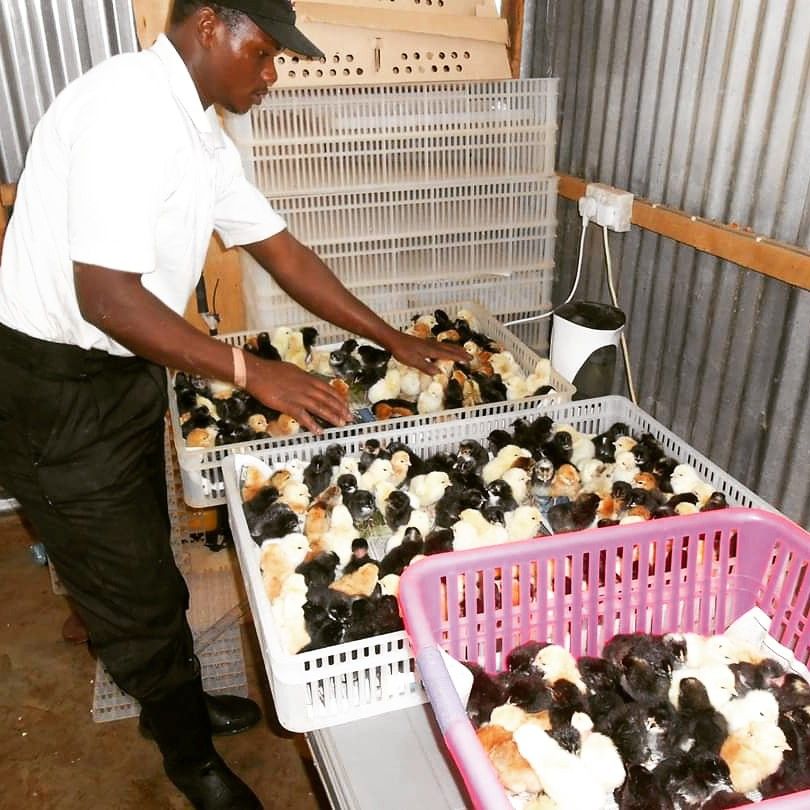
That means producing chicks locally, manufacturing feed efficiently, raising birds competitively, processing more poultry domestically and developing reliable distribution channels.
The farm-to-table concept is therefore bigger than increasing the number of chickens on farms.
It is about building an entire domestic poultry ecosystem.
For Ghana's farmers and agribusinesses, the coming period will show whether the country's poultry push can translate policy ambition into commercially sustainable production.